What WooCommerce’s Nightly Builds teach every eCommerce team
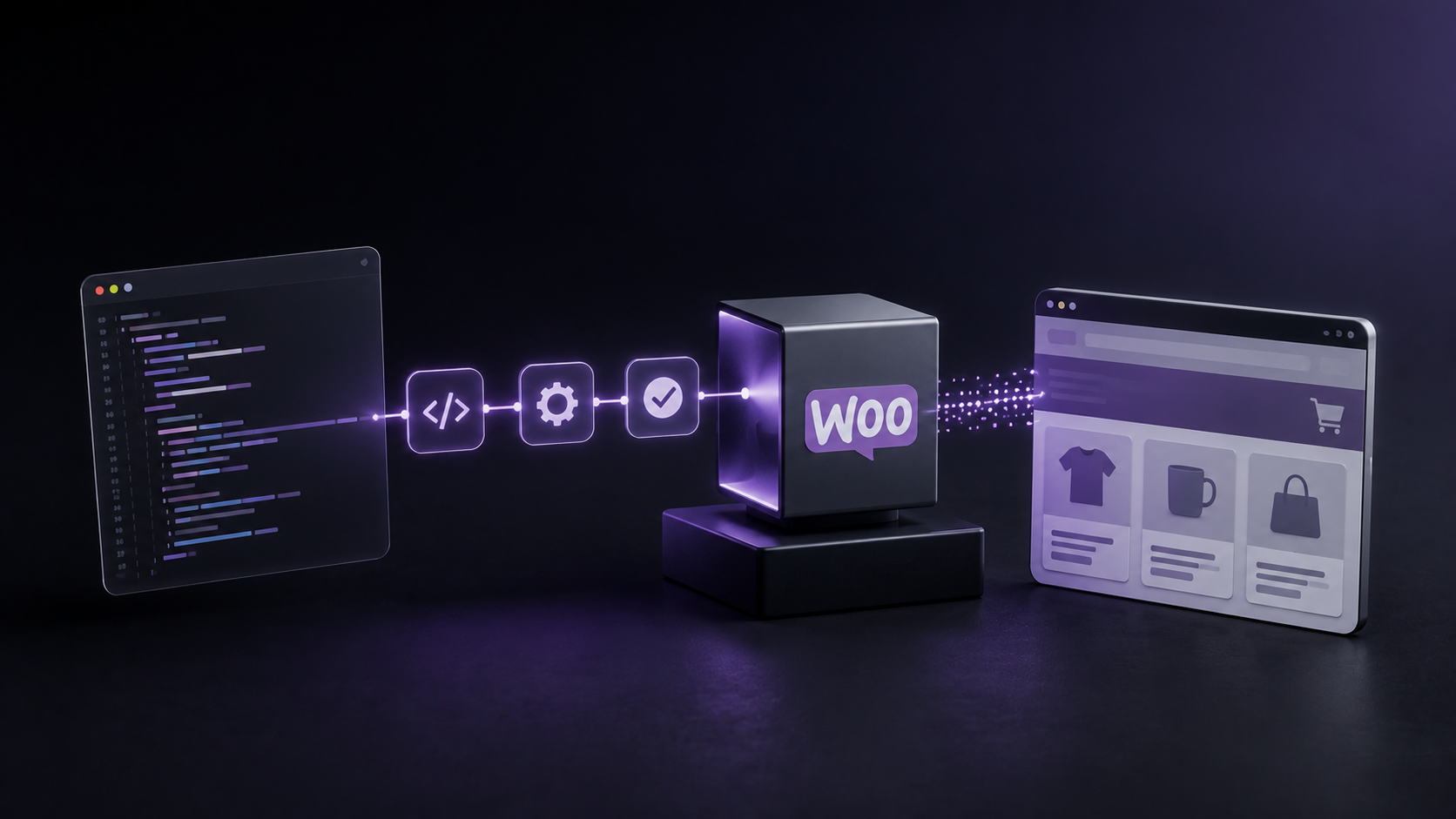
WooCommerce made a quiet but significant announcement last week: WooCommerce.com is now running on nightly WooCommerce Core builds. Not stable releases. Not even beta branches. Nightly builds, the freshest, least-proven code coming out of the development pipeline.
The reasoning behind it is straightforward: automated testing catches what you anticipate. Real traffic catches everything else. That principle doesn't stop at platform teams. It applies to every eCommerce store shipping code to production.
Real traffic finds what testing misses
The WooCommerce team built this discipline into their own flagship property because they believe, rightly, that no synthetic test replicates what real users actually do. In their first two weeks, the nightly pipeline surfaced issues that automated testing alone would have missed. Real traffic, real payment flows, and real product catalogue interactions found edge cases that controlled environments cannot replicate.
This is the exact principle behind real user monitoring (RUM): the most valuable performance and error data comes from actual sessions on your production site, not from lab simulations or staging environments. WooCommerce can act on this by shipping experimental code and watching what happens. For most eCommerce teams, the equivalent discipline is continuous monitoring of the stable code they already have in production.
The hidden cost of staging-only testing
Here's the uncomfortable truth: most eCommerce teams don't have the luxury of running experimental code on a high-traffic property like WooCommerce.com. Their staging environments are approximations. Their test coverage is never complete. And when code ships to production, the first people to discover bugs are paying customers.
Recent research from Baymard Institute (2026) puts hard numbers on this problem. Website had errors/crashed account for 15% of all checkout abandonments. At average eCommerce conversion rates of 2.5-3.0%, that's not a rounding error; it's a revenue leak that compounds with every release.
The WooCommerce approach, catching errors in production before they cascade, is exactly right. But most teams need a way to replicate that discipline without building an internal dogfooding infrastructure.
Jetpack Search 7.0 adds more complexity and risk
The same week WooCommerce announced its nightly build strategy, it also shipped Jetpack Search 7.0 with product-aware filters for WooCommerce stores. Now customers can filter by price range, stock status, colour, size, and more, directly within search results.
It's a meaningful upgrade for store discovery. But every new feature touching the product catalogue introduces new surface area for potential issues.
- Does the price range filter work correctly when tax settings vary by locale?
- Do stock status filters update in real time during flash sales?
- What happens when custom product attributes aren't indexed properly?
These are precisely the kinds of issues that appear in production at scale, not in a developer's testing environment with a dozen sample products. These are exactly the kind of silent failures that continuous production monitoring is designed to catch.
What breaks when no one is watching
WooCommerce's production testing strategy works because they've committed to one belief: you cannot fully know how your site behaves until real users interact with it. For the rest of the ecommerce ecosystem, the equivalent investment is continuous site monitoring, watching every real user session for JavaScript errors, broken checkout flows, degraded Core Web Vitals, and layout shifts that erode trust.
Consider what could happen without it:
- A JavaScript error in the cart might only affect users on a specific browser/device combination. Your QA team tested on Chrome and Safari, but the bug manifests on Samsung Internet, which accounts for 6% of your mobile traffic.
- A third-party script update silently increases your Largest Contentful Paint by 800ms. Your conversion rate drops 3% over the next week, but nobody connects the dots because nothing in your deployment pipeline changed.
- A product filter regression after a WooCommerce plugin update causes zero-result searches for 12% of queries. The error is silent, no console errors, no 500 responses, just confused customers who leave.
Each of these scenarios costs revenue. And each is invisible without the right monitoring in place.
How AuditIQ gives every store early warning
This is the problem AuditIQ was built to solve. Rather than requiring you to run experimental code on production (as WooCommerce bravely does with its own site), AuditIQ continuously monitors your live store from the perspective of real users.
AuditIQ watches for the signals that matter most to eCommerce revenue:
- JavaScript errors correlated with revenue impact, so you know which bugs to fix first
- Core Web Vitals degradation tracked against conversion baselines, connecting performance to business outcomes
- Checkout flow breakages are detected in real time, before they affect enough sessions to show up in your weekly analytics report
- Third-party script performance, because the code you didn't write causes more production incidents than the code you did write
The WooCommerce team acts on the belief that real traffic is the only honest test. AuditIQ gives every ecommerce team the same visibility into real user behaviour without requiring a single line of experimental code.
The takeaway
WooCommerce running nightly builds on production isn't just an engineering story. It's an acknowledgement that the most dangerous bugs are the ones you can only find with real traffic. Whether you're running WooCommerce, Shopify, Magento, or a headless storefront, the principle is the same: your production site is telling you things that your staging environment cannot.
The question is whether you're listening.
Start monitoring your store with AuditIQ and catch the errors your customers shouldn't have to find for you today!
About the author
Dan Garner writes from AuditIQ's experience monitoring eCommerce performance, SEO, security, and reliability issues across Magento, Shopify, WooCommerce, and Adobe Commerce stores.