Insight from AuditIQ
eCommerce monitoring, security, SEO, and performance.
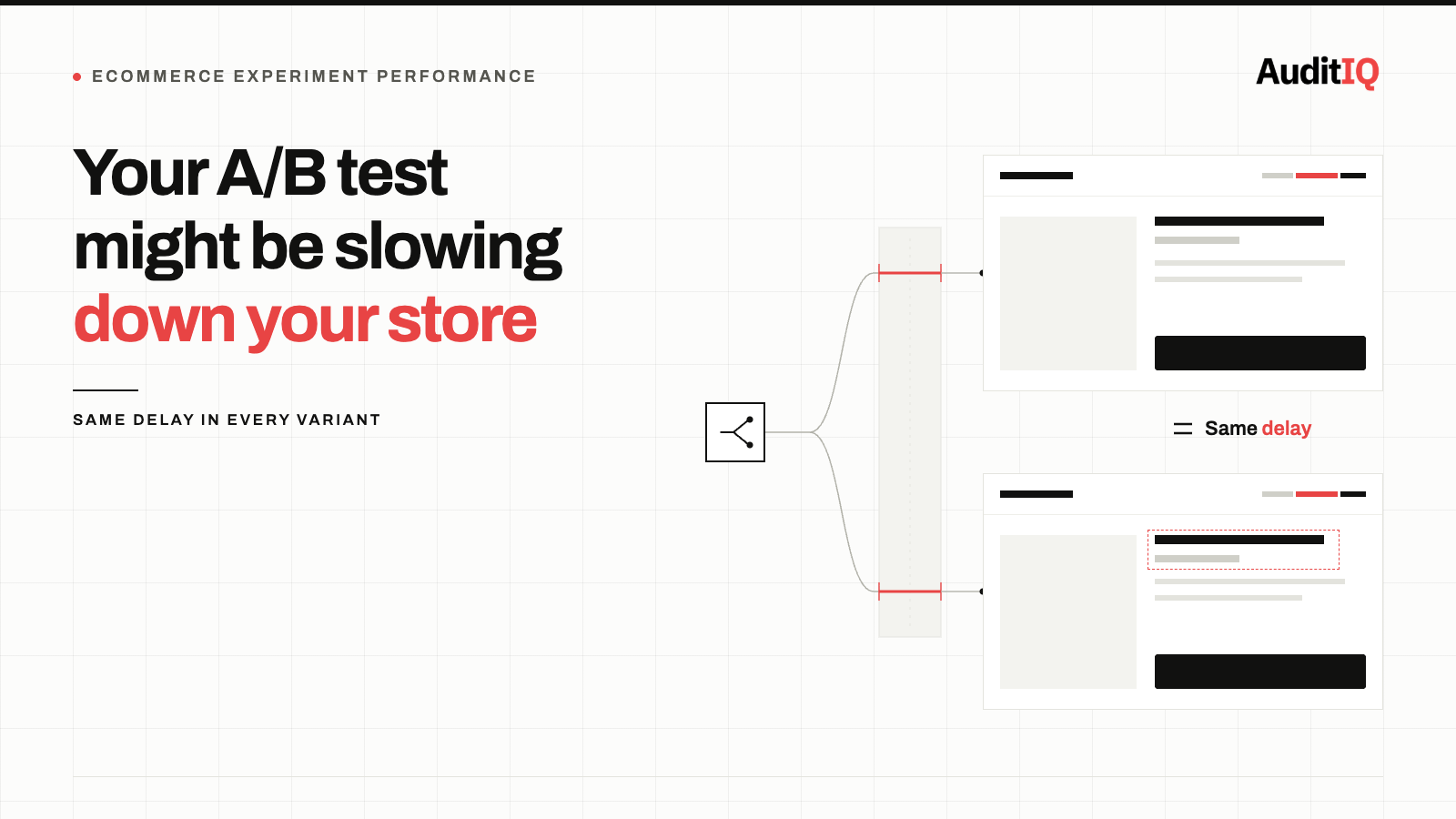
Your A/B testing tool is slowing down your eCommerce store: How to measure the conversion cost of the script that’s supposed to improve it
An A/B testing tool can slow your store because its client-side script has to load and evaluate before the page finishes rendering, and its anti-flicker snippet often hides the page until the variant is ready, which pushes Largest Contentful Paint later.
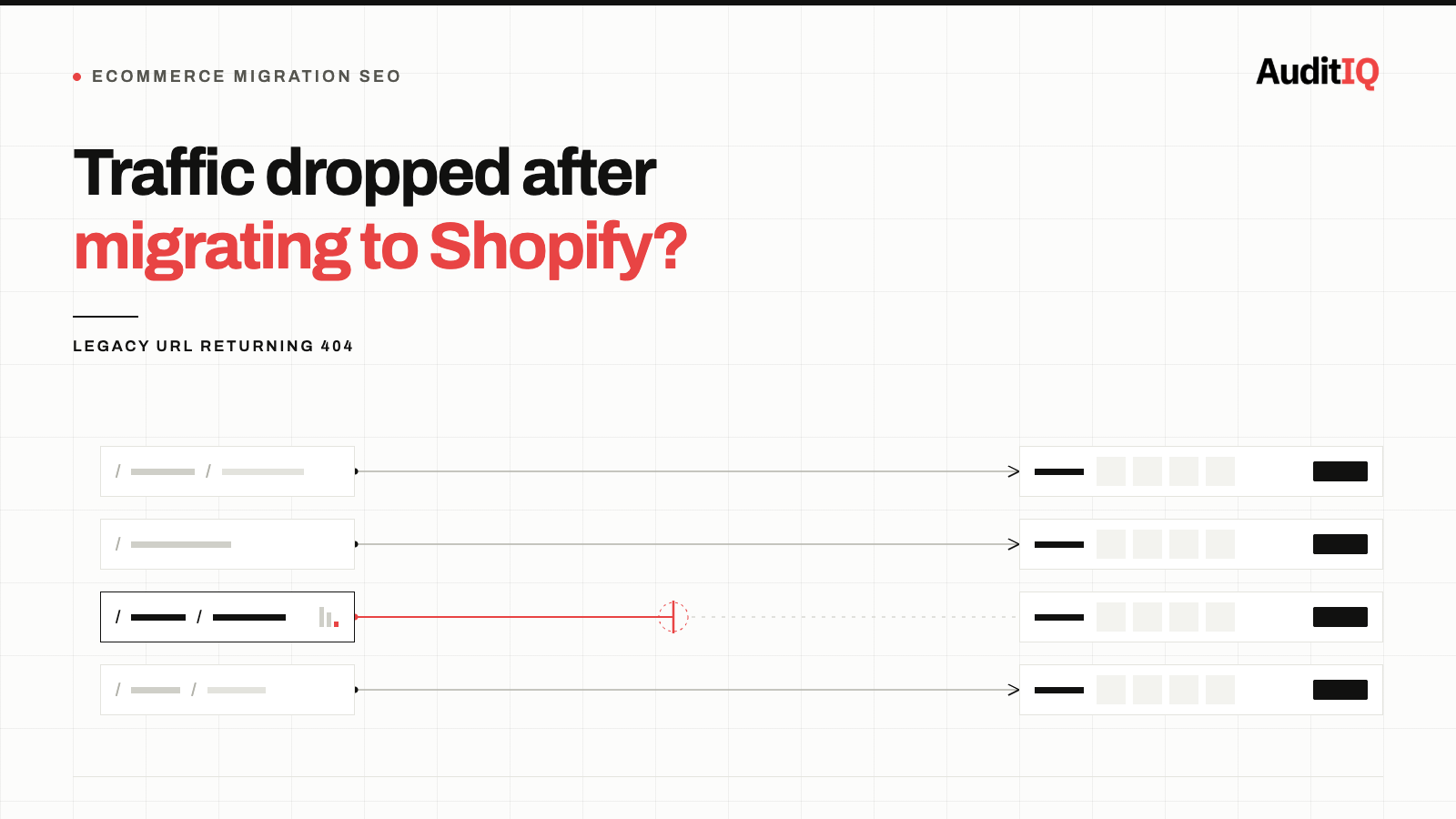
How to recover organic traffic after migrating to Shopify: A redirect mapping and monitoring guide
Organic traffic usually drops after migrating to Shopify because legacy product, collection, and content URLs from the old platform return 404s, pass through redirect chains, or conflict with Shopify’s canonical tags
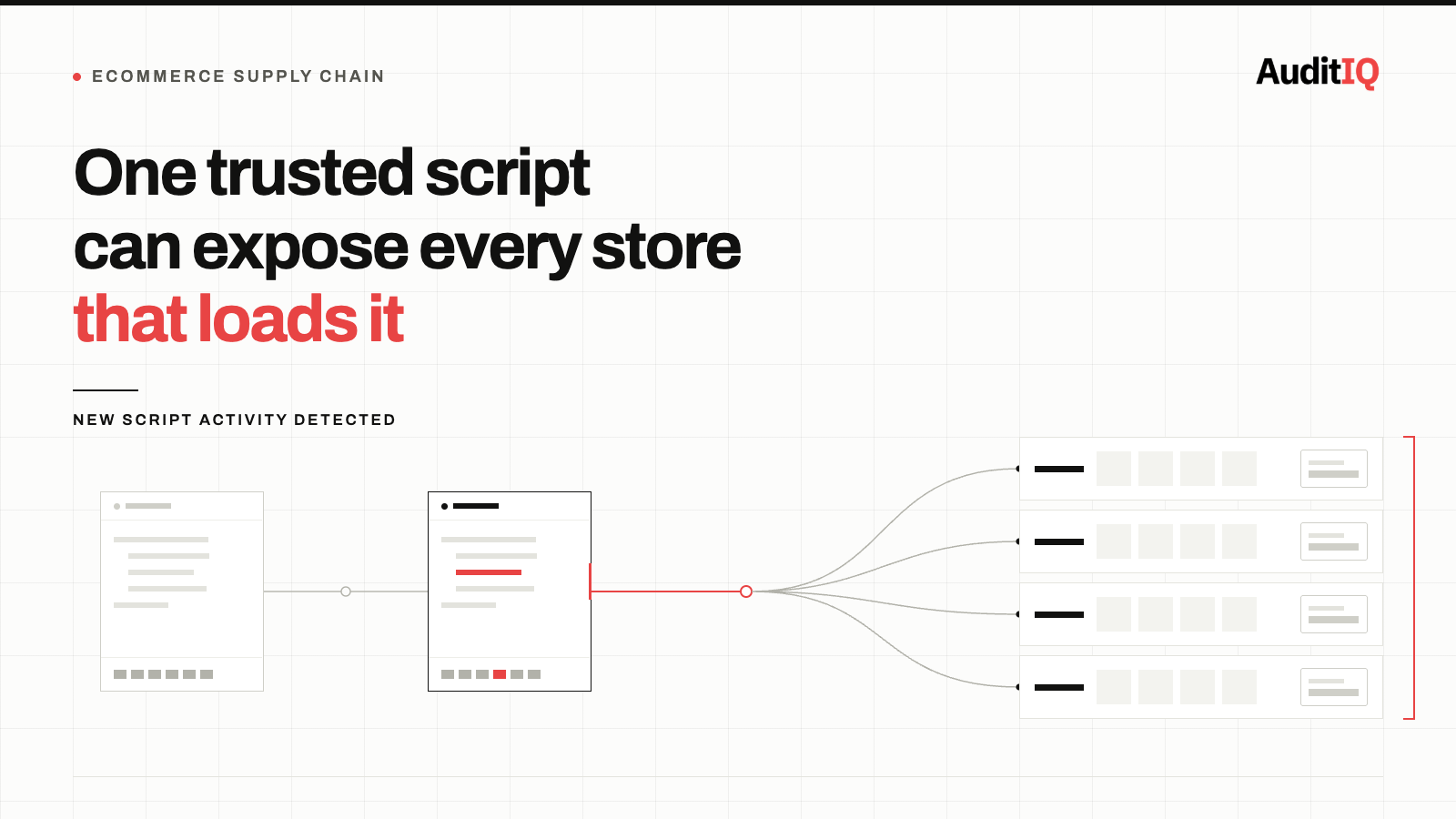
Your marketing widget just got hacked: How the Brevo supply chain attack proves every embedded script is a checkout security risk
The Brevo supply chain attack on September 14, 2026, used a stolen Cloudflare API key to rewrite the JavaScript served by Brevo’s embedded widgets, exposing an estimated 100,000+ websites to a fake “verify you are human” ClickFix prompt and, on WordPress, a backdoor plugin installed when an administrator visited
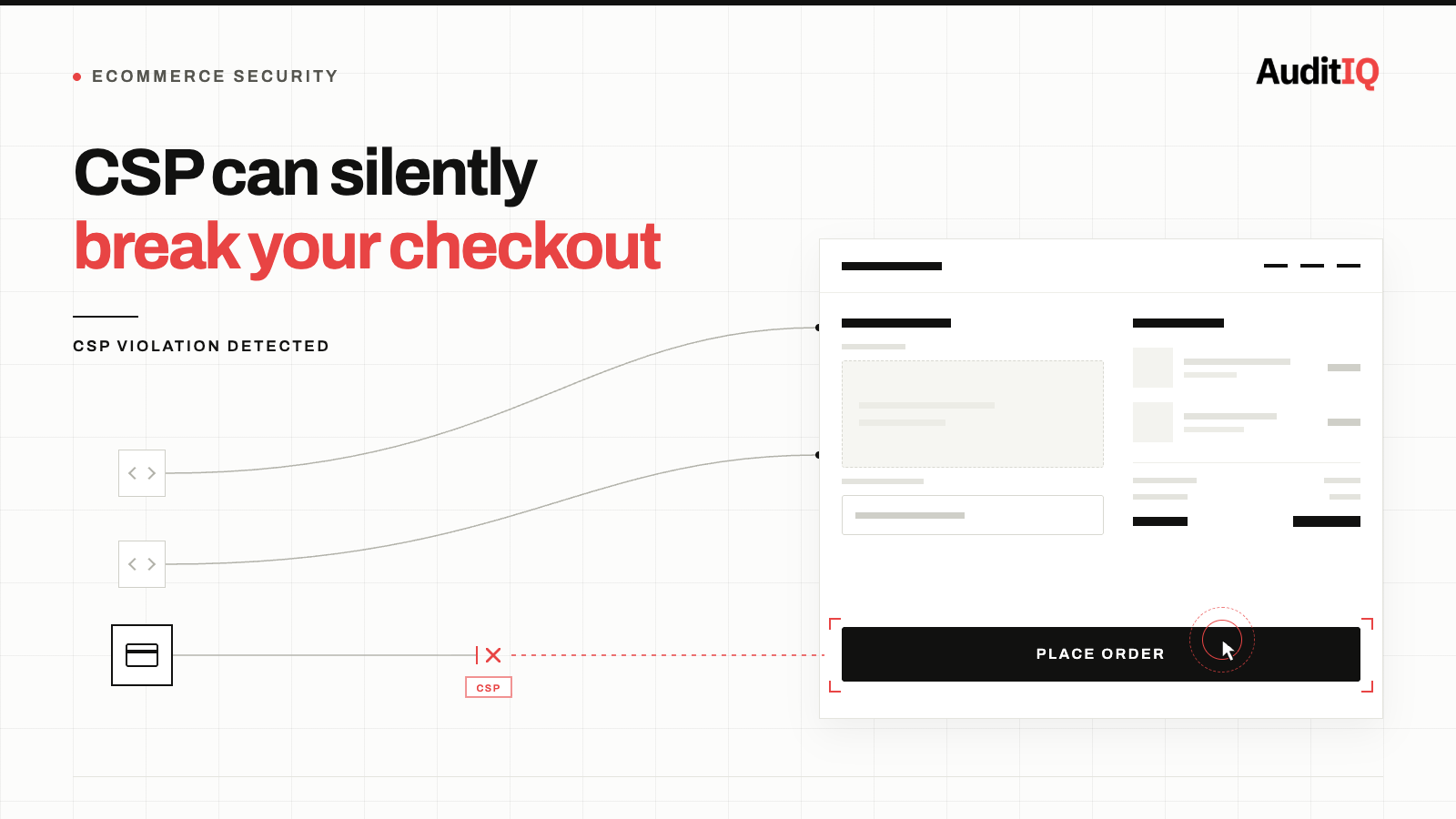
Why is Your Payment Form Blank on Magento? A Practical Guide to CSP Errors and How to Fix Them
Your payment form is blank most likely because Content Security Policy (CSP) headers that are too restrictive are silently blocking the payment gateway’s script, iframe, or inline code from loading on the checkout page.
AuditIQ Weekly (September 30th 2026)
In this week's AuditIQ Update, Alex unpacks the most significant developments across ecommerce infrastructure from the past seven days, including a Shopify update that quietly changed how every store's checkout works. The episode examines why browser-based AI agents can now complete purchases on Shopify stores, what this means for checkout extensions and conversion tracking, and the new monitoring challenges merchants need to address before holiday traffic amplifies any silent failures. Alex also dives deep into an increasingly common checkout failure that generates no admin alert: Content Security Policy headers blocking payment gateway scripts. With platforms tightening security policies and PCI DSS driving CSP adoption, more merchants are inadvertently breaking their own checkout without knowing it. Key topics covered: - Shopify WebMCP checkout support: what it means when AI agents can complete purchases in the buyer's browser - Shop's migration from shop.app to shop.com and what merchants should update - Shopify return window overrides and the compliance monitoring gaps they create - Category metafields and metaobjects now available in Shopify Analytics - POS stock counts and local delivery orders in Shopify POS 11.16 - Content Security Policy errors silently blocking payment scripts on checkout pages - The growing measurement gap as purchases happen across more surfaces - Pre-holiday operational deadlines: return shipping tax, script tag deprecation, Events complexity limits - Why silent failures are the most expensive kind, and what to do about them before peak season Visit www.auditiq.cloud to learn how continuous storefront monitoring catches the failures your uptime checks miss.
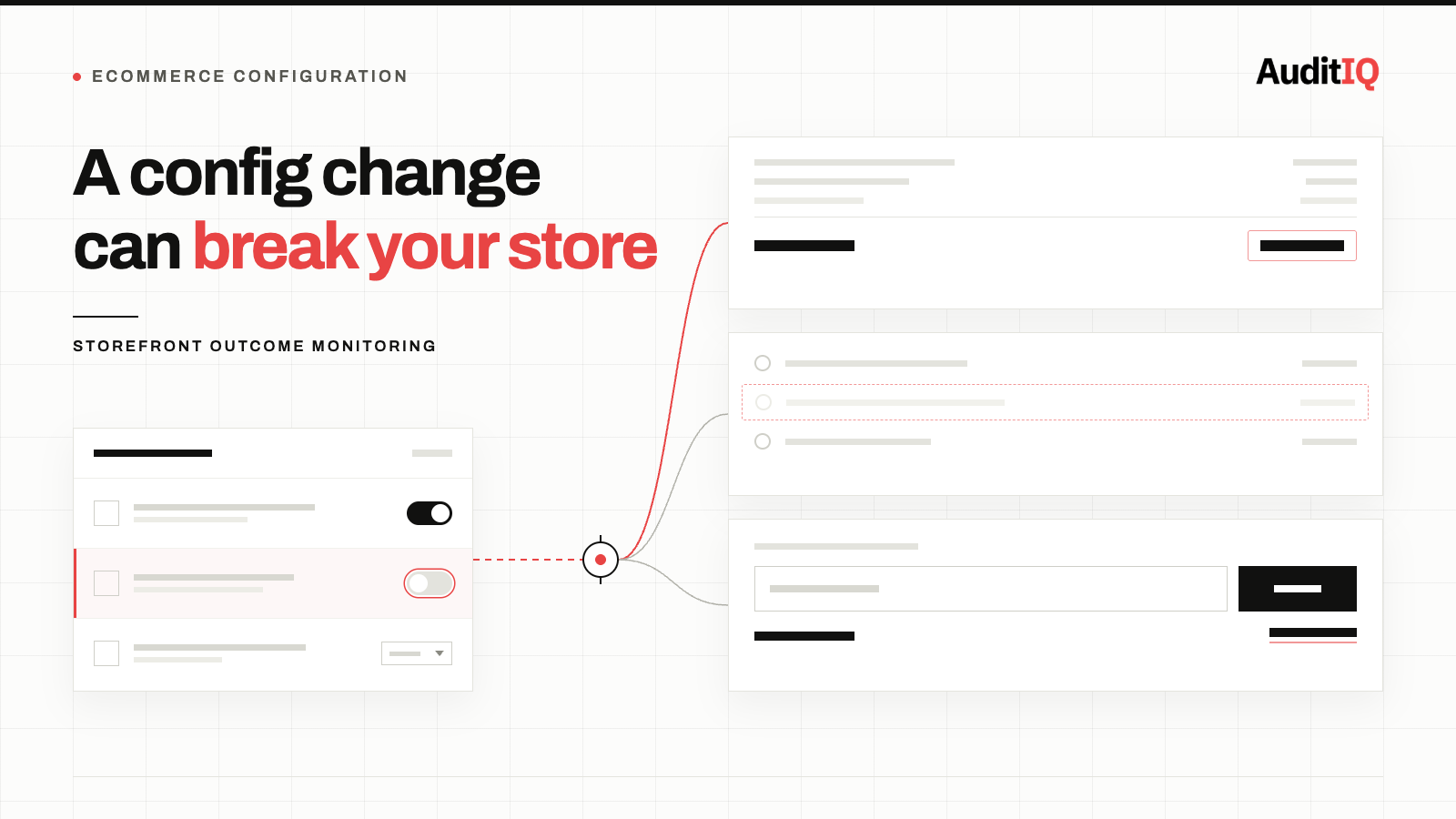
eCommerce configuration changes: The silent cause of storefront failures
An eCommerce store can break with no code deployment at all when someone changes a tax rule, edits a shipping zone, updates a discount, or rotates payment gateway credentials through the admin panel, changes that leave no entry in a deployment log or CI/CD pipeline. The failure shows up as wrong behaviour rather than an error: incorrect tax at checkout, “no shipping available” for a region, a discount that silently stops applying.
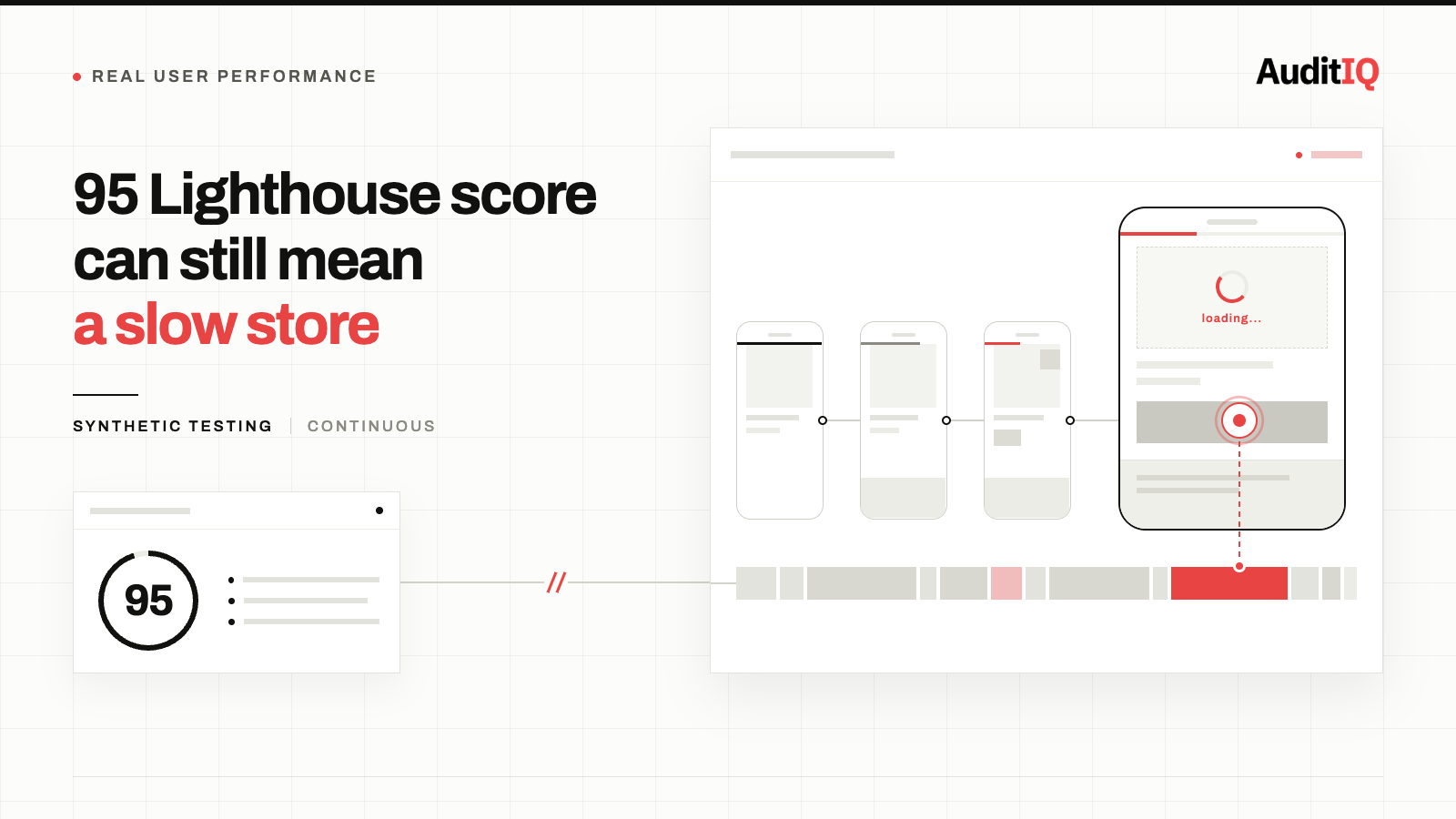
Why your eCommerce site passes Lighthouse but real shoppers still experience a slow store
An eCommerce site can pass Lighthouse and still feel slow to real shoppers because Lighthouse measures a single, anonymous page load under controlled lab conditions, while real customers browse multi-page journeys on mid-range phones over variable networks, carrying third-party scripts, personalisation, and accumulated page weight the lab test never sees.
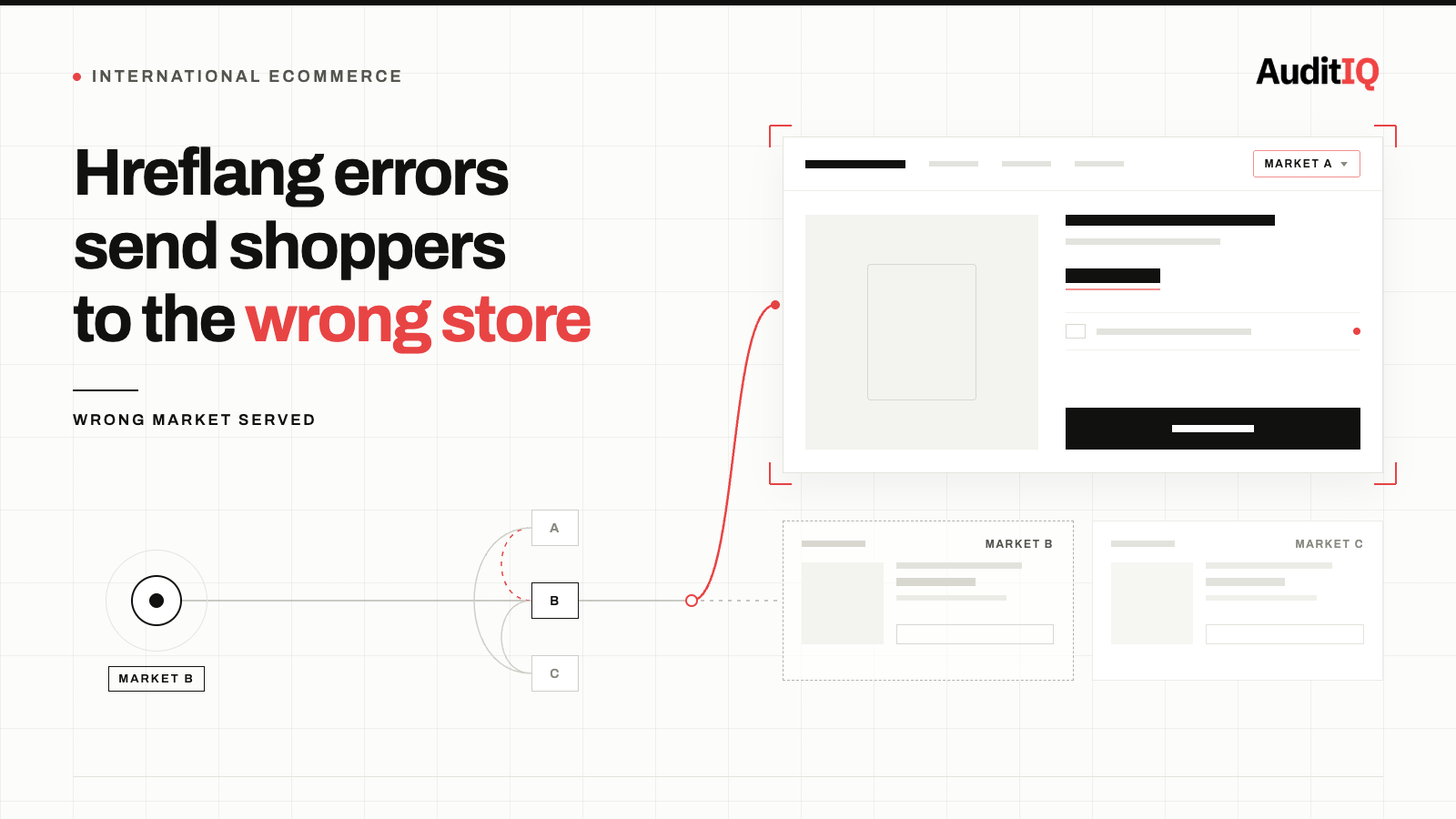
Google is showing your international customers the wrong version of your store: How hreflang errors silently lose cross-border revenue
Google shows international customers the wrong version of an eCommerce store, wrong currency, wrong language, or a market where the product isn’t even available, mainly because of hreflang errors: missing return tags, a missing x-default fallback, products that don’t exist in every market, or incorrect language and region codes.
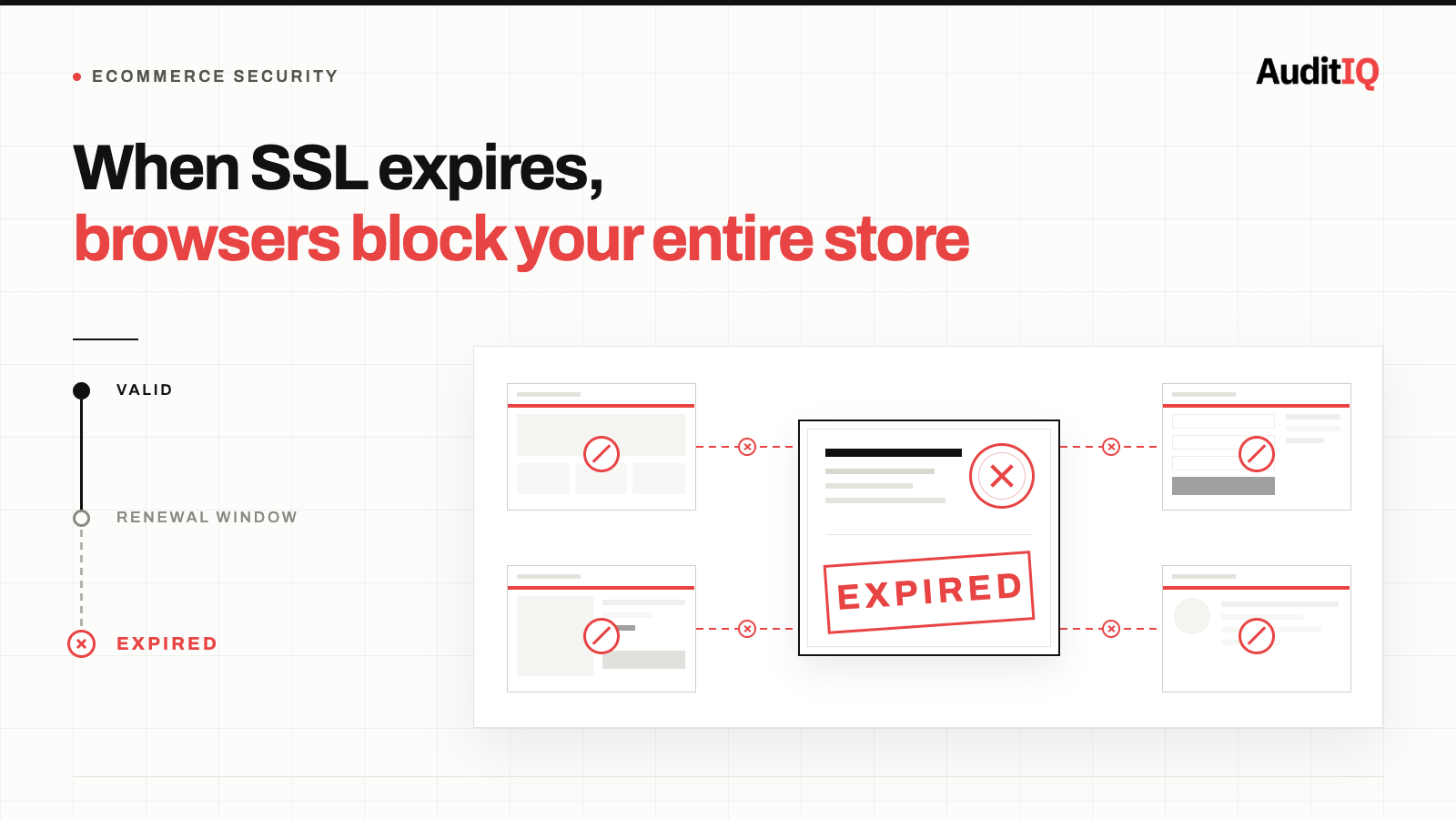
Your eCommerce SSL certificate will expire more often now: What happens to checkout when it does
When an eCommerce SSL certificate expires, every major browser immediately blocks the entire store with a full-screen security warning, checkout, product pages, and the homepage, and almost no shopper clicks through it.
AuditIQ Weekly (September 23rd 2026)
This week's episode unpacks one of the busiest weeks in ecommerce platform changes this year. Alex breaks down three Shopify infrastructure changes landing in rapid succession, explains why more than half of all vulnerable Magento stores have now been compromised, and reveals the performance measurement gap that means your Lighthouse score is probably lying to you about your customers' real experience. Key topics covered: - Shopify Events query complexity limit dropping from 250 to 100 points — what breaks and how to detect it - Shopify Rollouts A/B testing redesign: what it measures and what it misses - Shop Pay Installments expanding to multiple business entities - Magento PolyShell attacks hitting 56.7% of vulnerable stores and the ongoing StyleSmuggler aftermath - Cloudflare AI Crawl Control defaults going live on September 15 — is your store invisible to AI shopping? - Google's agentic commerce push: UCP, AI Max for Shopping, and the attribution blind spot - Shopify session measurement update: why your conversion rate just changed overnight - Google Ads AI Max auto-upgrade: diagnosing the conversion drop - Merchant Center image size warnings ahead of January 2027 enforcement - Why 40% of your Lighthouse score measures things real customers never experience The common thread: the most damaging ecommerce failures produce no error message, they require continuous monitoring to detect before the revenue damage accumulates. Learn more about ecommerce monitoring at www.auditiq.cloud .
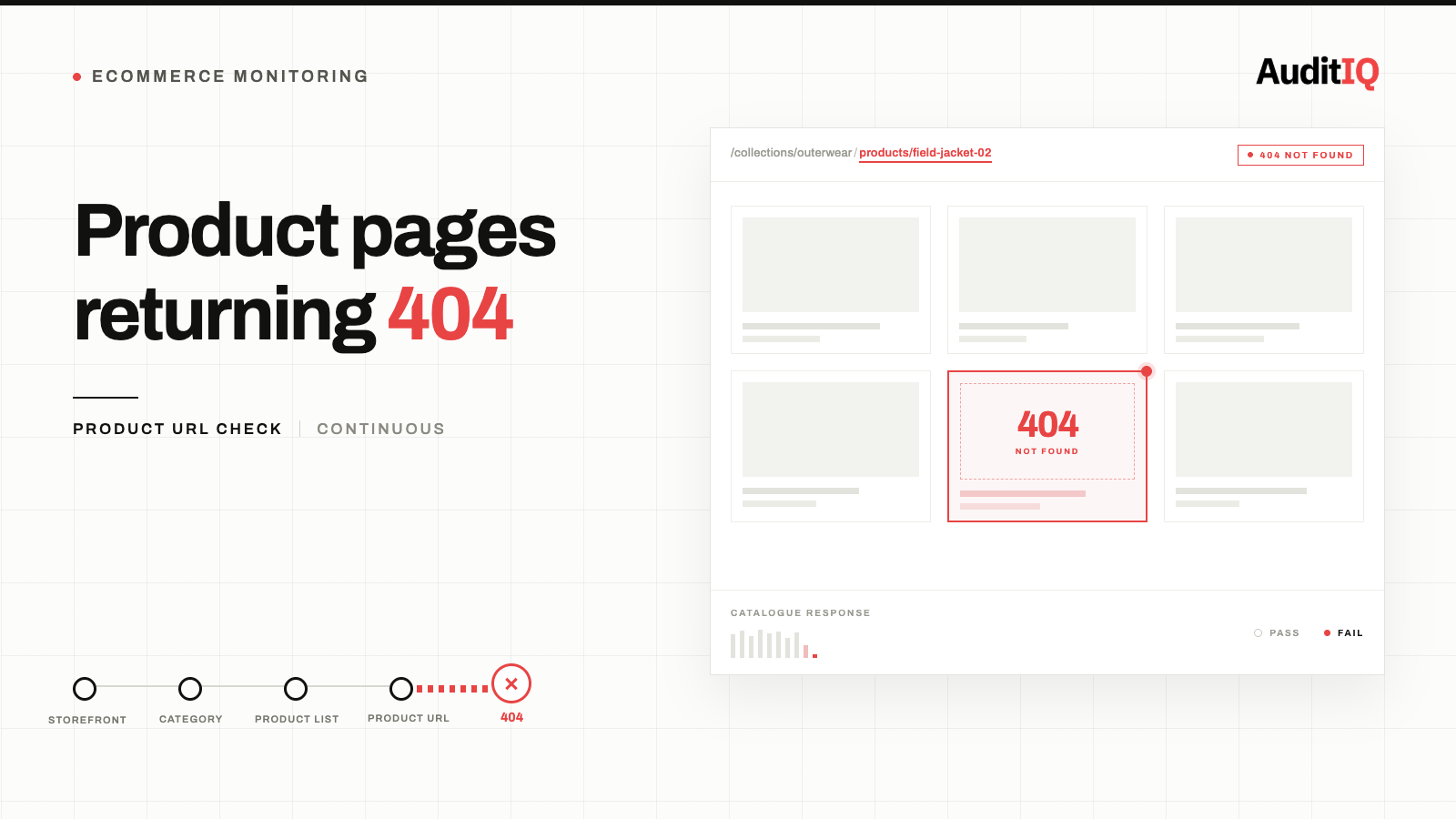
eCommerce product pages returning 404? How to find and fix broken URLs silently losing you traffic and revenue
Commerce product pages return 404 errors mainly because a product was deleted without a redirect, its URL slug changed after an edit, it was removed for the season, or a platform migration or bulk import overwrote the URL.

WooCommerce store hacked through a plugin: Guide to detect webshells before they steal customer data
WooCommerce stores running the Wholesale Lead Capture plugin can be hacked through CVE-2026-27540, an unauthenticated file upload flaw that lets attackers plant a PHP webshell with no login, no error, and no visible change to the storefront.

eCommerce Holiday Traffic Readiness: How to Find Silent Storefront Failures
eCommerce stores aren’t ready for holiday traffic when low-volume bugs already on the storefront, a payment method that occasionally times out, or a form that rejects valid mobile addresses, get amplified by 5–10x peak traffic into a measurable revenue crisis.
AuditIQ Weekly (September 16th 2026)
This week's AuditIQ Update covers the most significant ecommerce monitoring stories from September 9–16, 2026. Alex breaks down why the aftermath of the StyleSmuggler zero-day is more dangerous than the initial exploit, what Cloudflare's September 15 AI bot default changes mean for product visibility in AI-powered shopping, and why Google's AI Max auto-upgrades are causing conversion drops for eCommerce advertisers who haven't audited their landing page integrity. The episode also explores a revenue problem hiding in plain sight: false payment declines that silently reject legitimate customers at a cost of $201 billion globally, far more than fraud itself. Key topics covered: - StyleSmuggler CVE-2026-75650 post-exploitation detection for Adobe Commerce and Magento merchants - Cloudflare's September 15 AI crawler defaults and the verification steps eCommerce stores need now - Google Ads AI Max auto-upgrade conversion drops and how to diagnose Final URL Expansion problems - Google's new Data Strength Uplift metric and what it means for tracking quality - False payment declines: the $201 billion invisible revenue leak most merchants never measure - Shopify's September 15 admin redesign (Polaris 2.0) and app compatibility - Google Merchant Center "image too small" enforcement heading for January 2027 - Why AI Mode and the Shopping carousel show fundamentally different products and sellers - Shopify discount infrastructure changes and holiday promotion testing Learn more about eCommerce monitoring at auditiq.cloud .
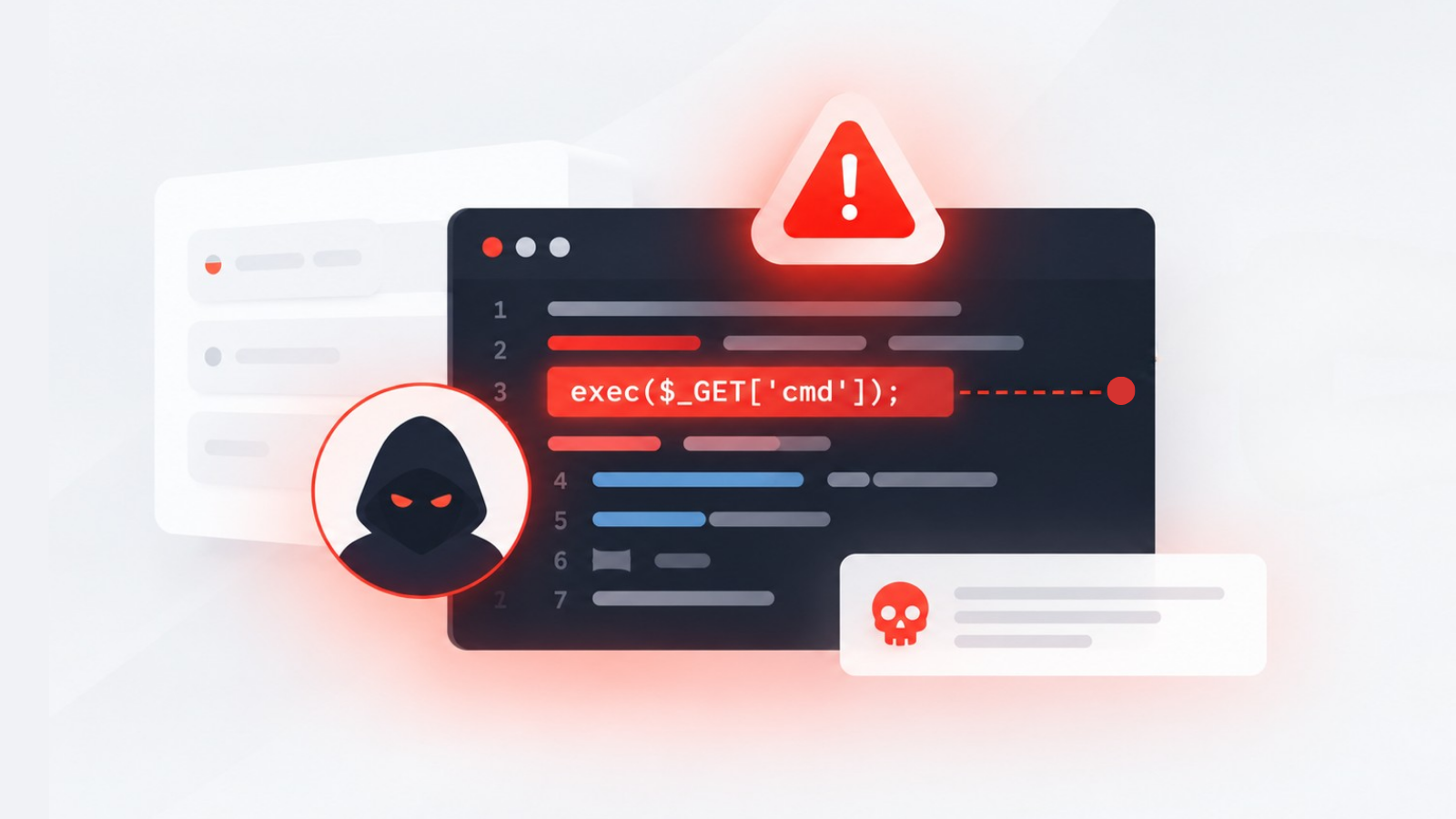
StyleSmuggler is actively backdooring Magento stores: Guide to detecting if your store is already compromised
StyleSmuggler (CVE-2026-75650) is a CVSS 10.0 unauthenticated remote code execution vulnerability in Adobe Commerce and Magento Open Source that attackers have been exploiting since September 4, 2026.
AuditIQ Weekly (September 9th 2026)
In this episode, Alex unpacks the most consequential two weeks in eCommerce monitoring, from Shopify's August 26 tracking deprecation that silently broke conversion data for thousands of non-Plus stores, to the emergence of AI agent orders that bypass analytics entirely. With Meta now joining ChatGPT, Google AI Mode, and Microsoft Copilot in Shopify's Agentic Storefronts, a growing share of eCommerce revenue is arriving through channels that GA4 cannot see. Alex explains what merchants need to monitor, why the platform-to-analytics revenue gap is the new metric that matters, and what to do before three more deadlines hit in the next two weeks. Topics covered in this episode: - Shopify Additional Scripts deprecation: what broke on August 26 and how to verify your tracking - Shopify's October 1 script tag deprecation and the apps that will silently stop working - Meta joining Agentic Storefronts and the AI agent attribution blind spot - Shopify multi-barcode support and what it means for Google Shopping feed integrity - WooCommerce 11.1: 30-42% faster Store API, native variation galleries, EU withdrawal flow - Adobe Commerce APSB26-92 active exploitation and post-patch verification - Amasty extension mass vulnerability disclosure and Magento extension auditing - Google AI Max auto-upgrade and landing page quality monitoring - Cloudflare's September 15 AI bot blocking default and eCommerce visibility - A practical two-week monitoring checklist for every eCommerce team Learn more about eCommerce monitoring at www.auditiq.cloud .
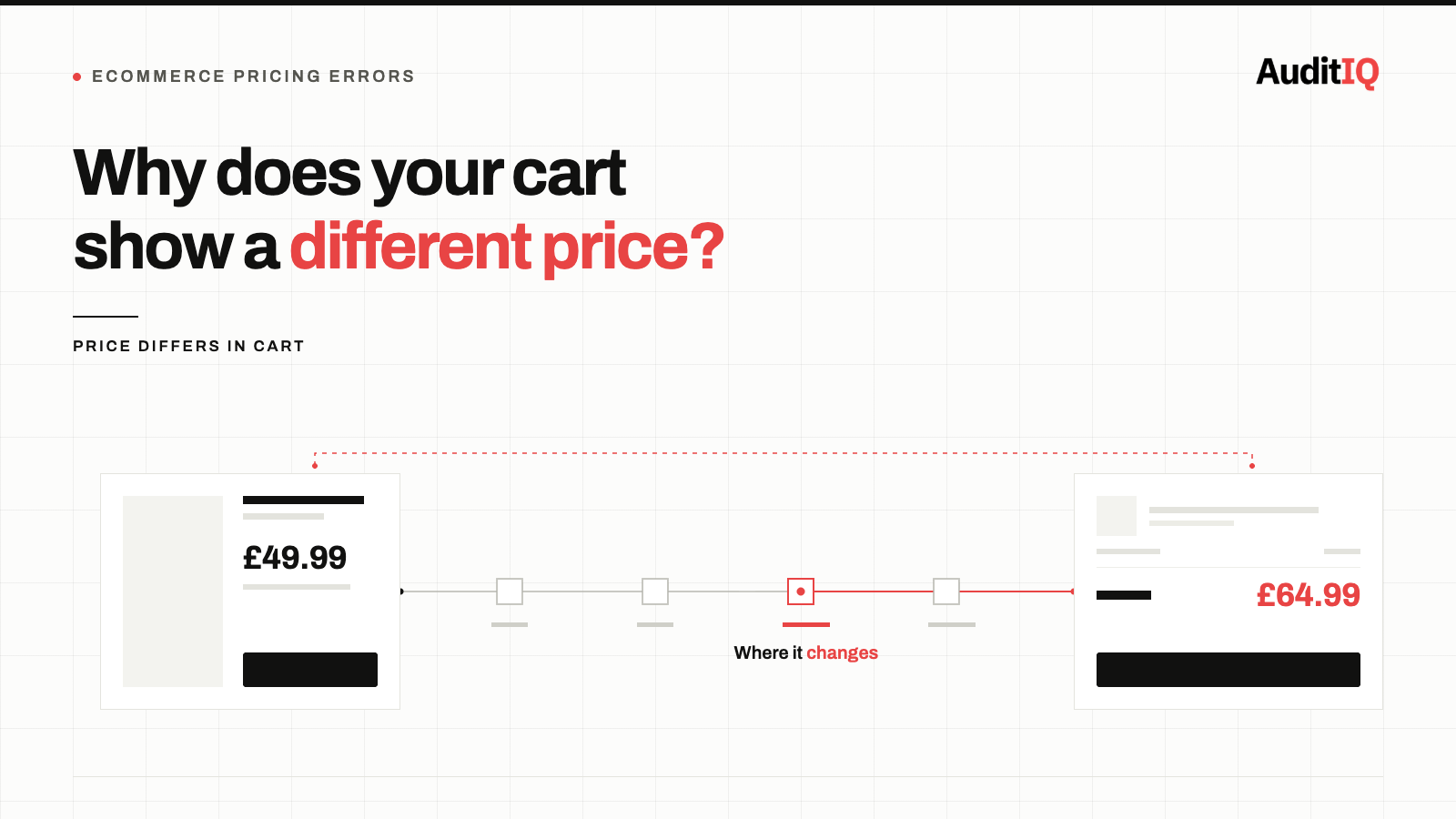
Why is my eCommerce store showing the wrong price? How to find and fix pricing errors before they cost you revenue and trust
An eCommerce store shows the wrong price when one layer of its pricing stack disagrees with another: a scheduled sale that never activated because cron or the timezone failed, stale cache, cart rules that differ from the product page, a promotion conflict, an app or theme that changes the displayed price, a failed ERP sync, or currency rounding.
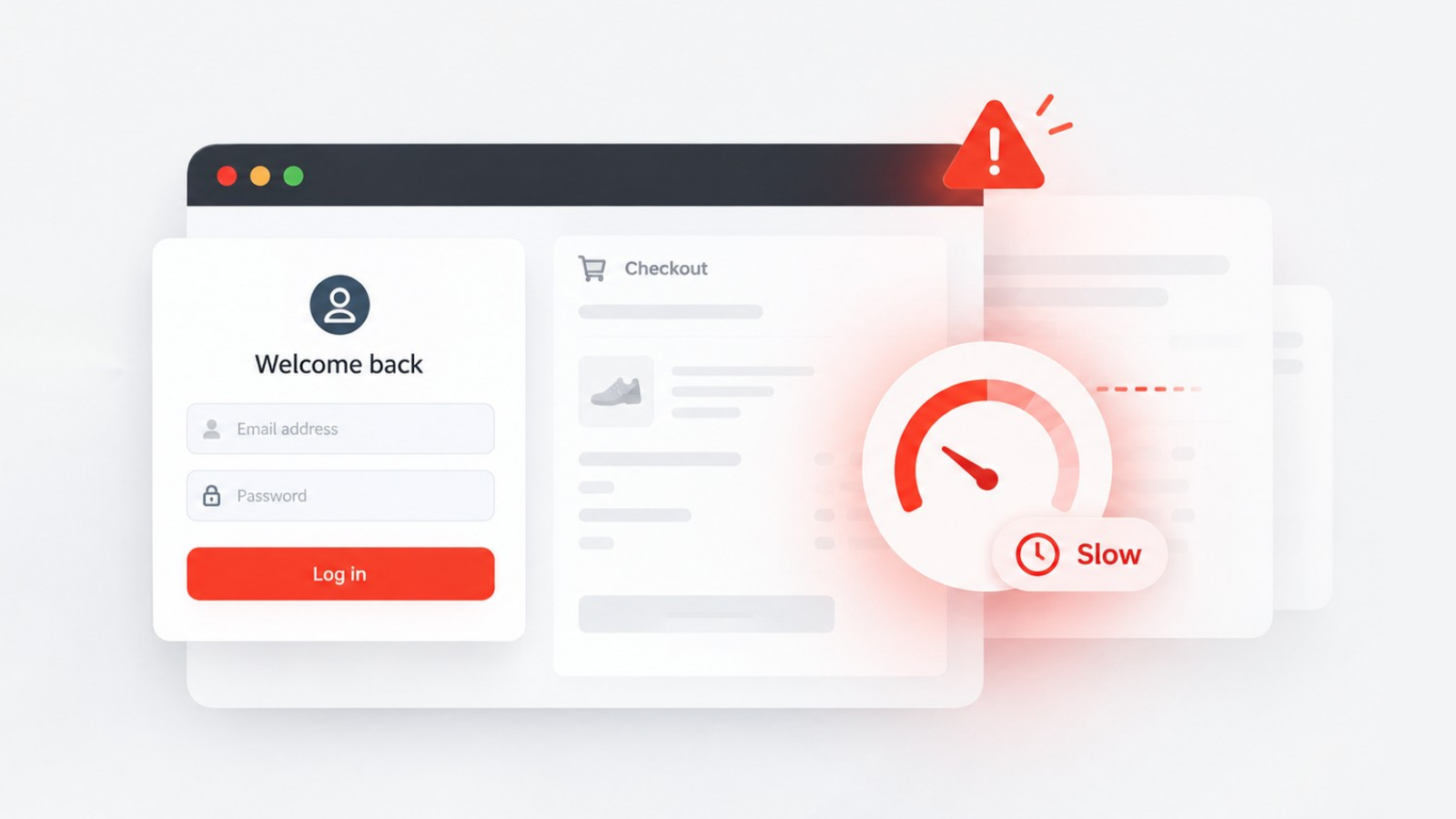
Adobe Commerce checkout slow for logged-in customers? How customer segments silently degrade performance
Adobe Commerce checkout can become significantly slower for logged-in customers while guest checkout remains fast. The most common cause is real-time customer segment validation, which runs on every page load for authenticated users and scales with the number and complexity of segments.
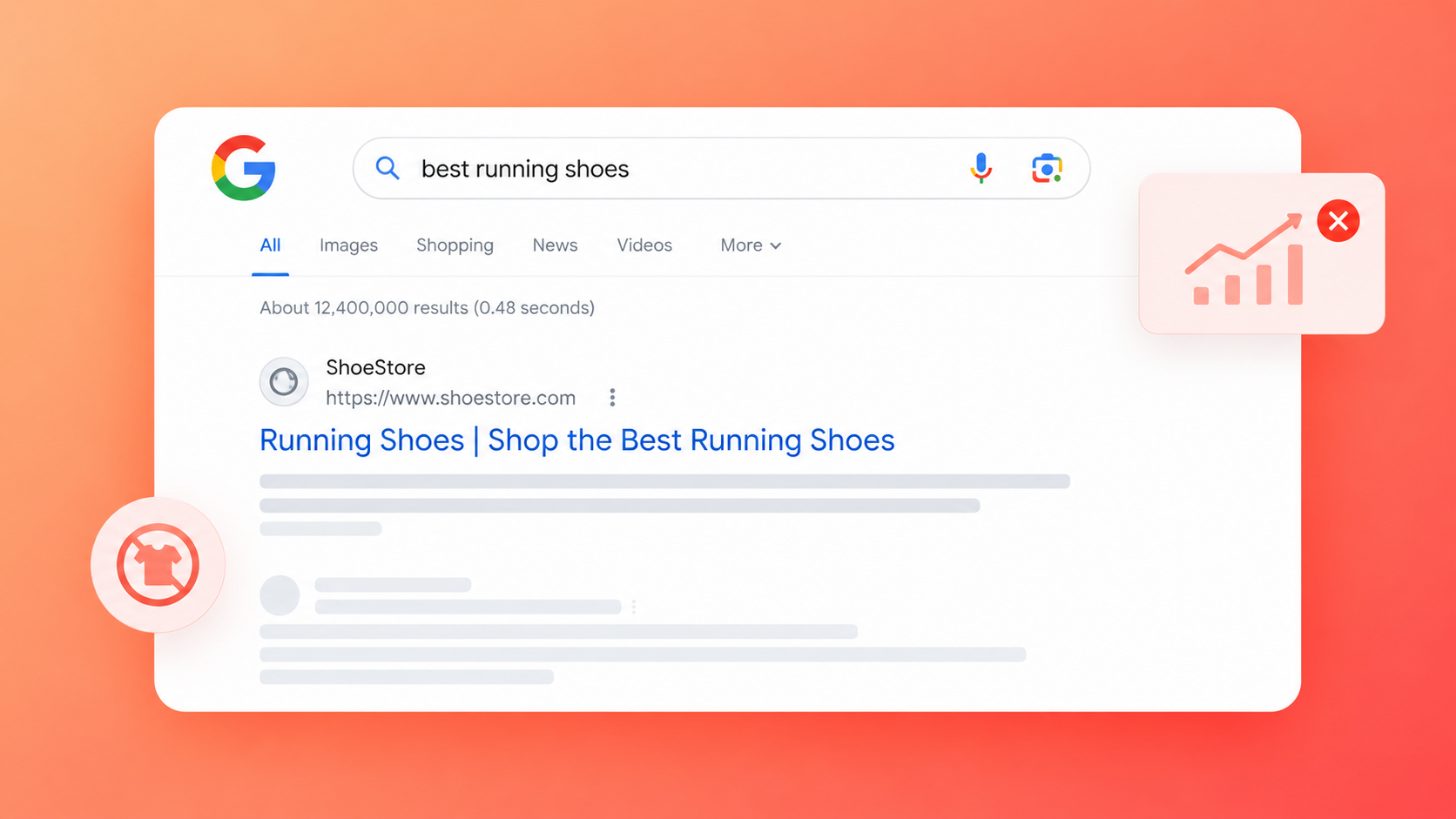
Product rich results not showing in Google? How to fix structured data errors costing you eCommerce clicks
Product rich results may not show in Google because Google never guarantees rich results even if your structured data is completely valid and error-free. Passing the Rich Results Test is necessary but not sufficient.
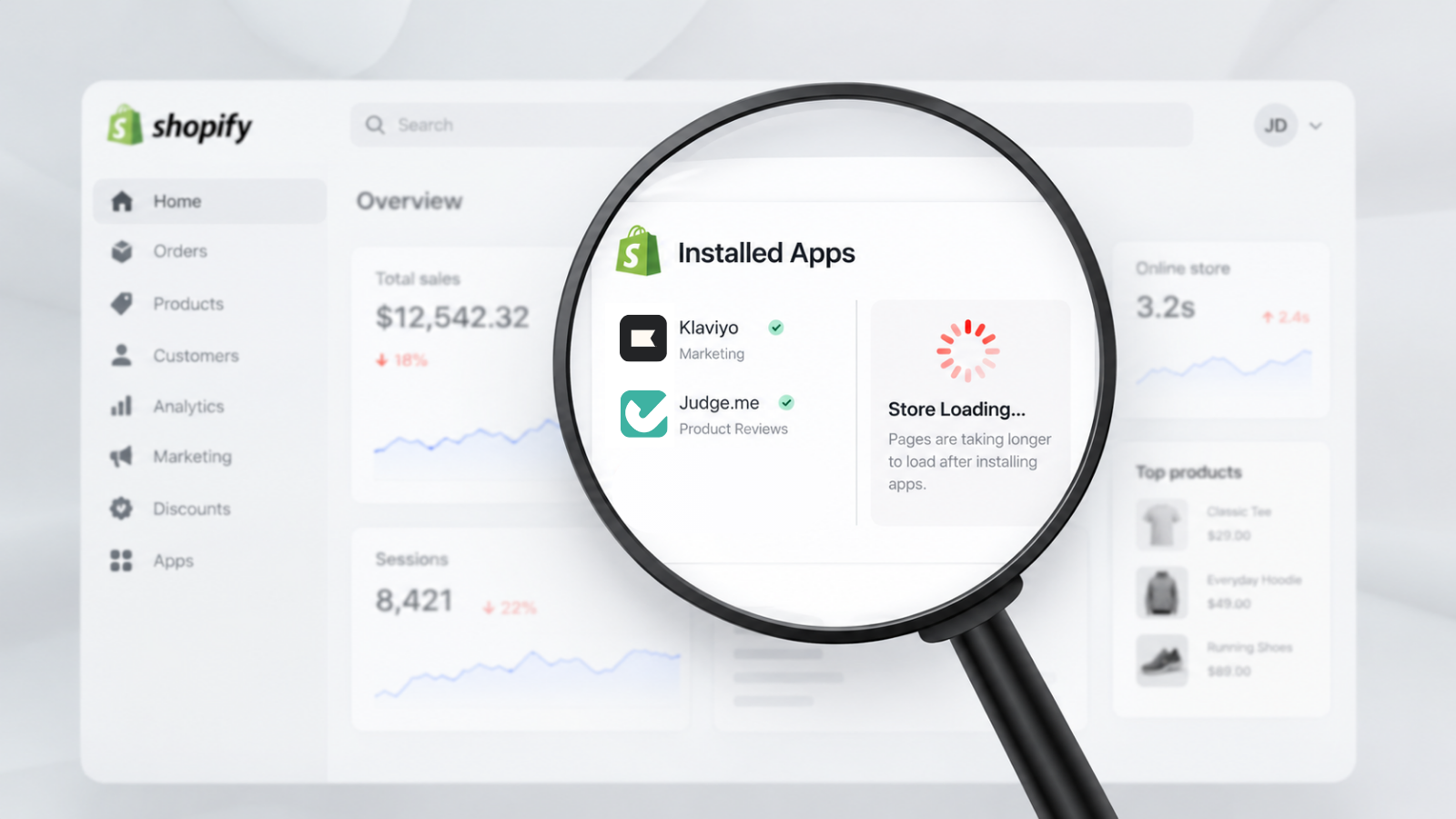
Shopify store slow after installing apps? Full guide to find the scripts that are silently killing your conversions
Shopify stores slow down after installing apps because third-party plugins inject extra JavaScript, CSS files, and external server requests into every page load, which blocks the browser from rendering content quickly, even where the app is not used.
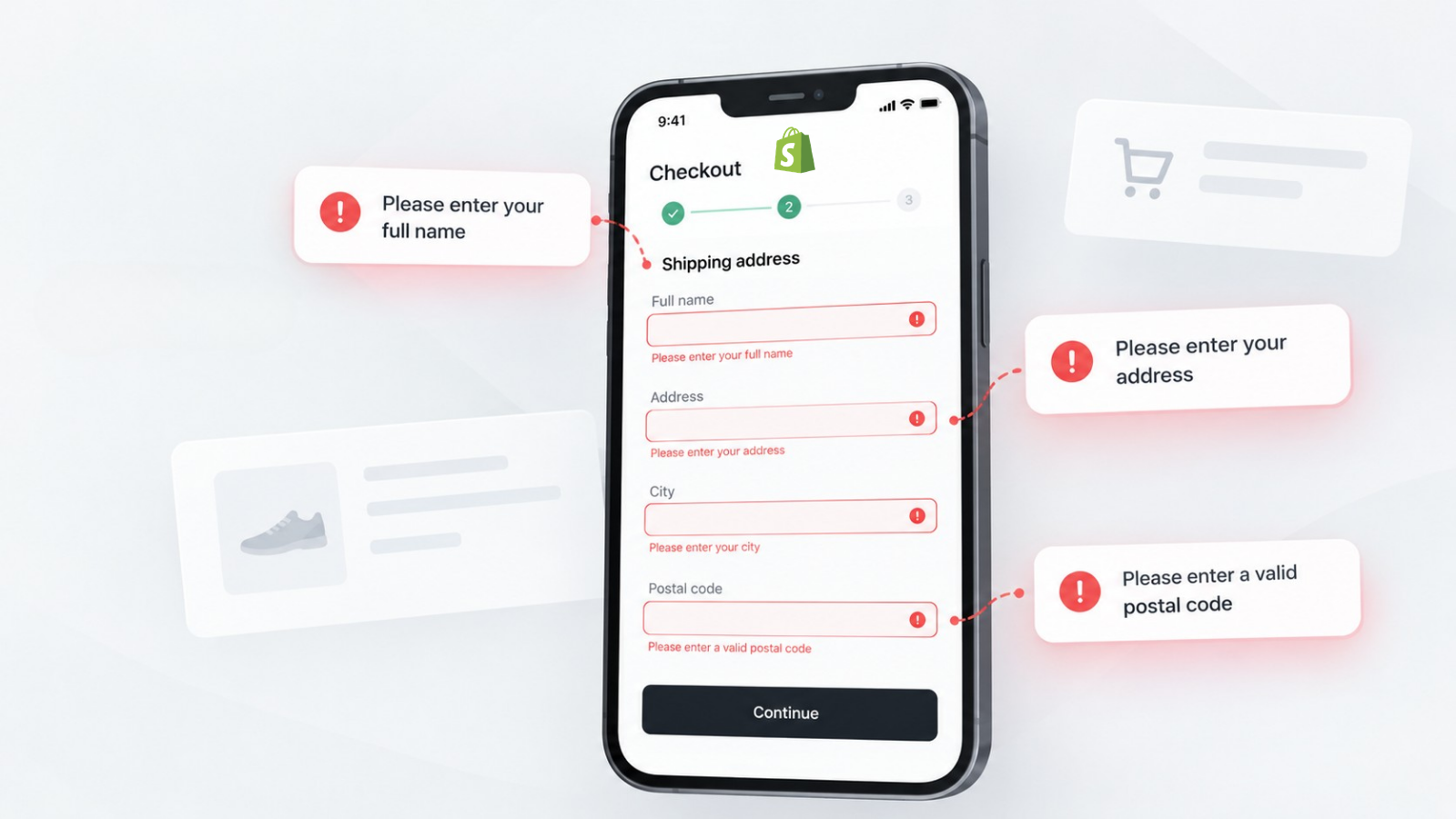
Shopify checkout errors on mobile: Form validation is silently blocking your highest-value customers
Shopify checkout errors on mobile usually come from browser autofill conflicts, address fields rejecting valid formats, or payment iframes failing to render on certain devices, issues that show no error in Shopify's admin or analytics.
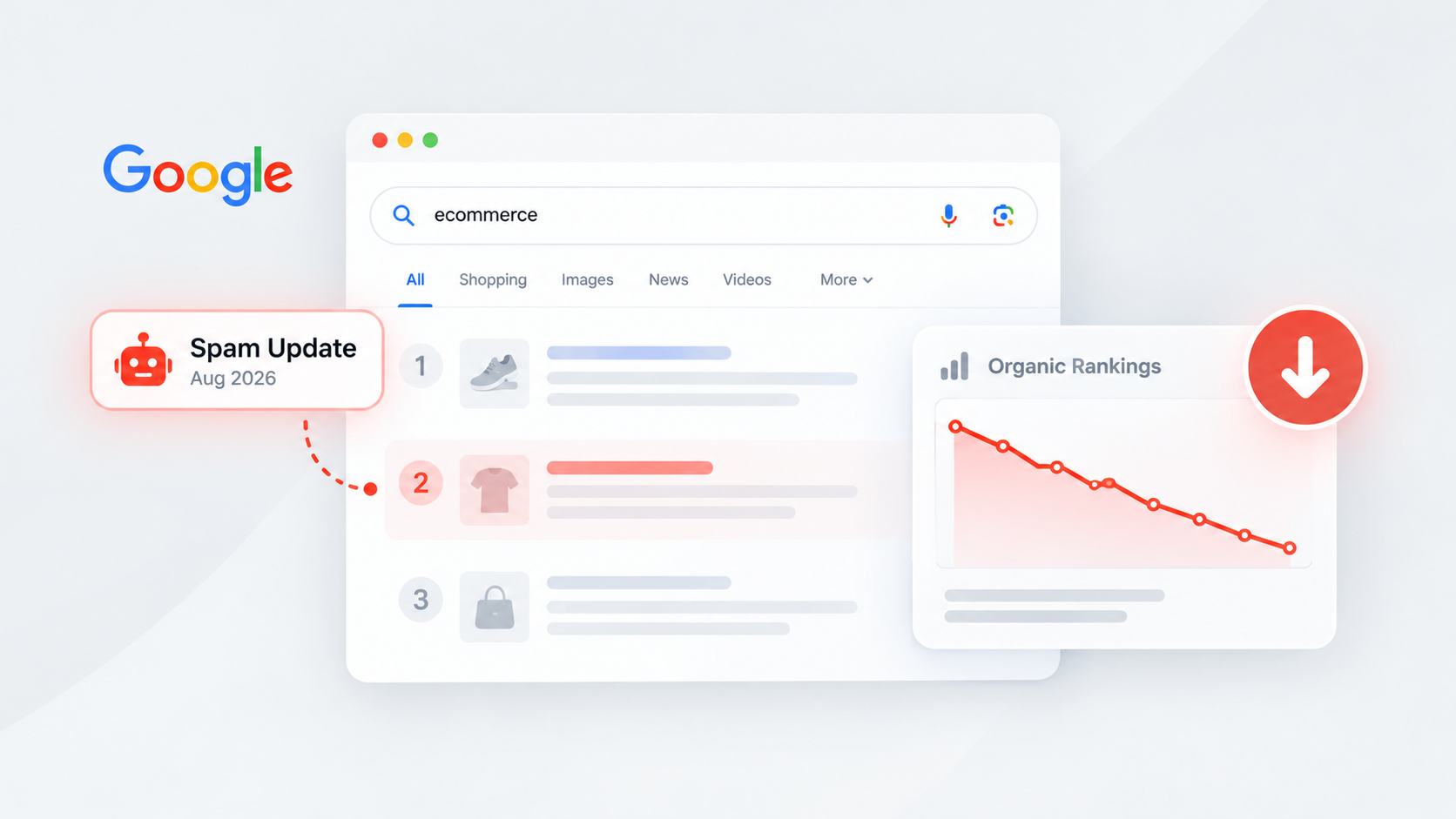
eCommerce rankings dropped after Google's August 2026 spam update? Here's how to diagnose and recover
Google's August 2026 spam update rolled out from August 18 to 21 (2 days and 16 hours) and eCommerce sites with scaled product descriptions, thin category pages, or programmatic SEO content have reported ranking and traffic drops.

Why adding more payment methods is slowing down your checkout: It costs you the conversions they were supposed to win
Adding more payment methods can slow down your checkout because each provider loads its own JavaScript SDK, opens additional network connections, and competes for browser processing time.
AuditIQ Weekly (August 26th 2026)
In this week's AuditIQ Update, host Alex breaks down the most significant eCommerce monitoring developments from August 19–26, 2026, a week dominated by forced platform migrations, critical security patches, and the hidden performance costs that checkout pages are silently accumulating. The episode leads with today's Shopify Additional Scripts deprecation, the deadline that auto-upgraded every non-Plus store and silently removed the tracking scripts that thousands of merchants depend on for Google Ads, GA4, and Meta conversion data. Alex walks through exactly what broke, how to verify your tracking, and why this is a cautionary tale about monitoring revenue-critical scripts. Key topics covered: - Shopify's August 26 Additional Scripts removal: what's broken, how to diagnose, and how to recover - Sansec's August 25 disclosure of a Shopware Store API vulnerability enabling administrator takeover (CVE-2026-48008) - Shopify's DDU-to-DDP Managed Markets forced migration: what changed on August 24 for international checkout - WordPress 7.1 breaking WooCommerce stores via the enforced iframe editor - WooCommerce 11.1 beta and EU withdrawal button compliance - Cloudflare Bot Preference Sync: what it means for AI visibility and robots.txt - The checkout performance paradox: why more payment methods can mean fewer conversions - Google Ads August 17 bidding change: early impact data after one week - What's coming in September: AI Max auto-upgrade and WooCommerce 11.1 GA Whether you run Shopify, WooCommerce, Shopware, or any other eCommerce platform, this episode covers the silent failures and forced changes that are reshaping how stores need to monitor their operations. Learn more about continuous eCommerce monitoring at www.auditiq.cloud .

Third-party JavaScript on checkout: Security, performance & compliance risks
Auditing third-party JavaScript on eCommerce checkout pages involves creating a complete runtime script inventory, removing or deferring unnecessary scripts, verifying authorised scripts with integrity controls, and continuously monitoring for unauthorised changes.

Misclassified Cookies: How to fix broken eCommerce checkout
Finding and fixing miscategorised cookies that silently break eCommerce checkout involves testing your store with non-essential cookies declined, identifying essential session, cart, CSRF, and payment cookies that are being blocked, and reclassifying them as “Strictly Necessary” in your Consent Management Platform (CMP)

The Amasty disclosure: Why third-party extensions are Magento's biggest security risk
In August 2026, Sansec disclosed that Amasty, one of the largest Magento extension vendors, had patched vulnerabilities across dozens of extensions, including two critical remote code execution flaws, confirming that third-party extensions are the primary attack surface for Magento and Adobe Commerce stores.
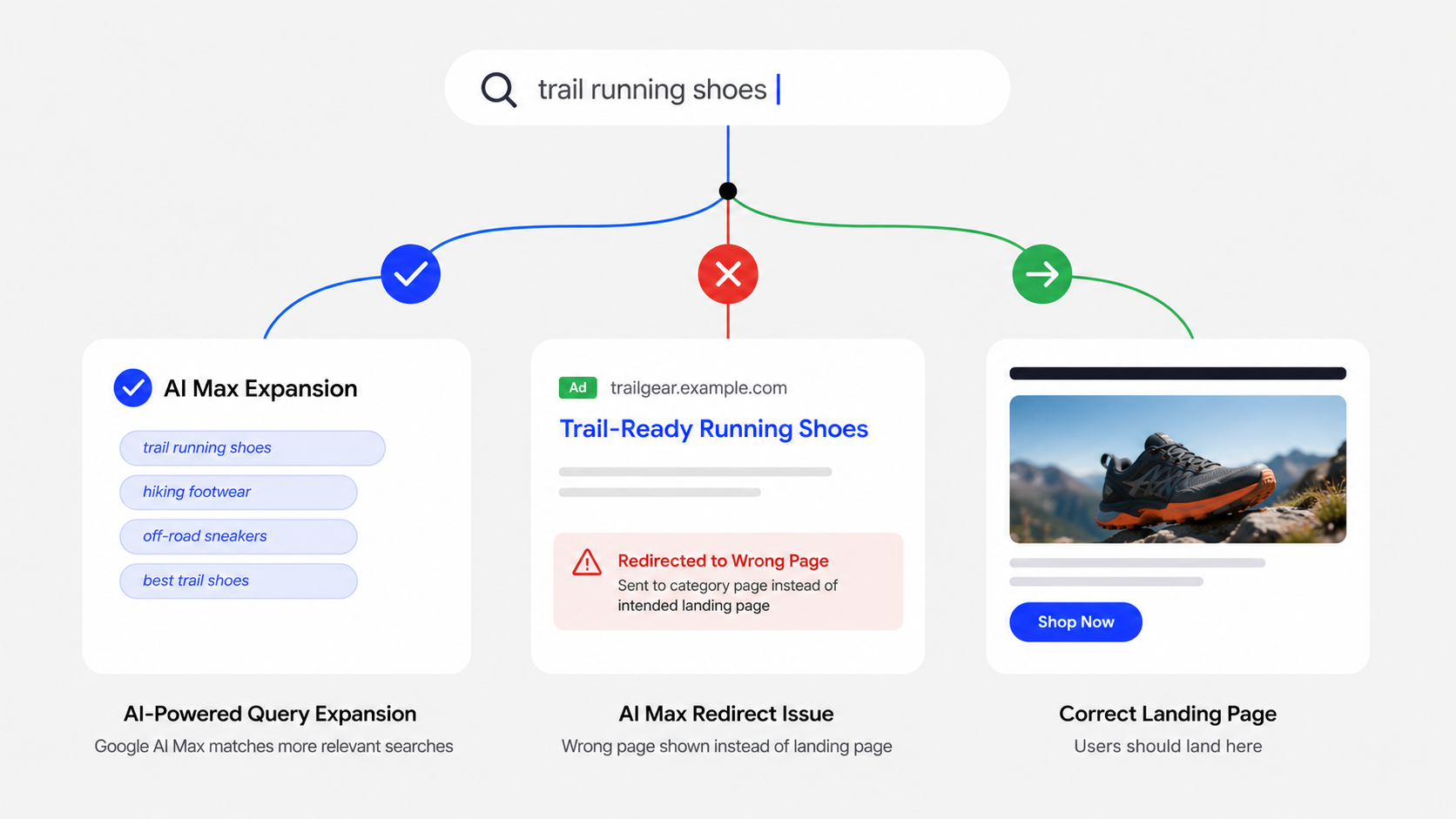
Google AI Max is sending your paid traffic to the wrong pages: Guide to finding and fixing broken landing pages before September
Google's AI Max Final URL Expansion can send your paid traffic to the wrong pages. The feature crawls your site and automatically selects what it considers the most relevant landing page for each query, which often includes blog posts, out-of-stock products, or pages missing conversion tags

Why did my eCommerce revenue drop when traffic stayed the same?
When your eCommerce traffic holds steady but your revenue drops, the issue fundamentally stems from a decline in either your Conversion Rate (CR), your Average Order Value (AOV), or a shift in your Product Mix toward lower-margin items.

Adobe Commerce APSB26-92 is being actively exploited: How to detect if your store is already compromised
AuditIQ Weekly (August 19th 2026)
This week's AuditIQ Update covers the most consequential week in ecommerce infrastructure in recent memory. Alex breaks down the actively exploited Adobe Commerce vulnerability that lets attackers take over customer accounts without any credentials, the permanent shutdown of Google's Content API for Shopping and what it means for product visibility, and the three platform deadlines converging between August 24 and August 31 that could silently disrupt checkout, tracking, and advertising for thousands of merchants. Key topics covered: - Adobe Commerce APSB26-92: why the unauthenticated account takeover vulnerability is being actively exploited and what storefront symptoms to watch for - Google Content API for Shopping shutdown: how to verify your product feed survived the transition and what to do if products have disappeared - Shopify's August 24 DDU-to-DDP forced migration and its impact on international checkout prices - Shopify's August 26 checkout script deprecation for non-Plus stores and the revenue flows at risk - Google's August 31 Local Inventory Ads auto-enable and the product data integrity challenge it creates - Why international checkout price transparency failures are the biggest silent revenue leak in cross-border ecommerce - How the ecommerce monitoring industry is shifting from reactive error tracking to continuous storefront monitoring Whether you run Adobe Commerce, Shopify, WooCommerce, or BigCommerce, this episode covers the changes you need to verify this week. Learn more about continuous ecommerce monitoring at www.auditiq.cloud .
Ecommerce site is slow on mobile but fast on desktop: What it's costing you in conversions?
Mobile devices drive 65% of eCommerce traffic but account for only 42% of conversions, according to Digital Applied's 2026 conversion benchmarks. The gap is not explained by screen size or user intent alone; it is primarily a performance problem. eCommerce sites that appear fast on desktop and score well in synthetic tests are measurably slower for real mobile shoppers, and the performance bottlenecks that cause this are invisible to the tools most teams use to measure speed.

Why did my eCommerce organic traffic drop after a theme or app update?
Theme and app updates are one of the most common causes of sudden eCommerce organic traffic drops, typically surfacing 3–14 days after deployment through canonical tag changes, structured data loss, or internal link regressions that Google detects before you do.

AI can now exploit your eCommerce vulnerabilities in 15 minutes: Your patch window has collapsed
AI tools can now generate a working exploit for a published eCommerce vulnerability in 10 to 15 minutes, and Mandiant's 2026 data shows attackers are, on average, exploiting vulnerabilities before a patch even exists.

Payment plugin gets patched, your checkout doesn't verify itself: The revenue gap between security updates and storefront integrity
In early August 2026, WooCommerce Subscriptions and Stripe for WooCommerce both received urgent security patches; Stripe's was its second critical update in under 30 days. Apply these patches immediately, then verify your complete checkout flow across all payment gateways, guest and authenticated sessions, subscription renewals, and webhook processing before assuming your revenue-generating functionality survived the update.
Three platforms, three critical patches, one week: eCommerce's patch velocity problem is now a revenue problem
Between August 6 and 11, 2026, WordPress 7.0.3, WooCommerce 11.0.1, and Adobe Commerce APSB26-92 all shipped critical security patches within days of each other, creating compounding regression risk for stores running multiple updates simultaneously.
AuditIQ Weekly (August 12th 2026)
In this week's episode, Alex unpacks one of the most operationally intense weeks in recent eCommerce history: Three critical platform security patches landing across Adobe Commerce, WooCommerce, and WordPress within five days, a surprise Shopify announcement that will silently change international checkout pricing for thousands of merchants, and the final countdown to multiple infrastructure deadlines converging in mid-to-late August. Key topics covered in this episode: - Adobe Commerce's APSB26-92 security patch fixing an unauthenticated customer account takeover and six other vulnerabilities - WooCommerce 11.0.1's checkout, Store API, and guest session security fixes, and why merchants need to retest after updating - WordPress 7.0.3's 12-vulnerability security release and the compounding risk of stacking platform patches - Shopify Managed Markets ending DDU support on August 24, forcing international stores to DDP with duties collected at checkout - Shopify's new POS receipt editor and the January 2027 Liquid deprecation deadline - The convergence of the Google Content API shutdown (August 18), Shopify checkout deprecation (August 26), and DDU-to-DDP migration (August 24) - Google AI Overviews expanding to 14% of shopping queries and what this means for product data accuracy - A practical action checklist for eCommerce teams navigating August's infrastructure changes Whether you run Shopify, WooCommerce, or Adobe Commerce, this episode is essential listening for understanding the risks and the monitoring requirements of August 2026's platform changes. Learn more about continuous eCommerce monitoring at www.auditiq.cloud .

Google Merchant Center goes down: Your revenue doesn't come back automatically
On August 6, 2026, Google Merchant Center experienced an outage that caused product listings to go inactive for merchants running Shopping campaigns and Performance Max, and many did not reactivate automatically when the platform recovered.

The AI bot paradox: eCommerce stores must welcome the crawlers that could also be attacking them
In 2026, AI crawlers powering product discovery and AI bots used for competitive scraping and security attacks are technically indistinguishable; both arrive as verified automated traffic through the same channels.

Cloudflare's September 15 AI bot defaults will decide whether your products appear in AI search: Do you know the setting exists?
On September 15, 2026, Cloudflare will flip a switch that could make thousands of eCommerce stores invisible to AI-powered search engines overnight. And the merchants affected probably won't know it happened for weeks
Proactive monitoring: How agencies turn client visibility into retainer growth
AuditIQ eCommerce monitoring tool was built around how agencies actually work: multiple clients, limited time, and a constant need to demonstrate value across every account without manually checking each one

The global Core Web Vitals pass rate just dropped: eCommerce stores are paying the price in conversions
The global Core Web Vitals pass rate has declined for the first time in over two years, driven largely by eCommerce sites adding more third-party scripts and dynamic content. If your store's mobile performance is degrading, set up continuous monitoring to catch regressions before they cost you conversions

Shopify’s August 26 checkout deprecation: How to protect your post-purchase revenue flows
On August 26, 2026, Shopify will auto-upgrade all non-Plus stores’ Thank You and Order Status pages, permanently removing Additional Scripts and custom code. Audit everything running on your post-purchase pages now, migrate to web pixels and checkout extensibility apps, and verify replacements are firing correctly before the deadline.

Google's content API for shopping dies in 13 days: Your product visibility is on the line
Google's Content API for Shopping is about to be shut down permanently on August 18, 2026. If your integration still uses this API, your products will stop syncing and begin disappearing from Google Shopping results and AI Mode recommendations.
AuditIQ Weekly (August 5th 2026)
August 2026 is shaping up to be the most consequential month of the year for eCommerce merchants. In this episode, Alex breaks down three critical platform deadlines converging within a single month, and explains why the real danger isn't the transitions themselves, but the silent failures that follow when something goes wrong. From product feeds going dark to conversion tracking vanishing without a trace, this briefing covers everything eCommerce teams need to know to navigate the month ahead. Key topics covered: - Google's Content API for Shopping shutdown on August 18 and what it means for product feed integrity, Shopping campaigns, and AI Mode visibility - Shopify's August 26 deprecation of Additional Scripts on Thank You pages for non-Plus stores and the hidden revenue flows at risk - Adobe Commerce 2.4.5 and 2.4.6 end of support on August 11 and the cascading ecosystem risks for 112,000+ stores - WooCommerce 11.0's launch with native Checkout Recovery and a critical inventory bug fix - Shopify's new collaborator verification and multi-tracking number API support - The MRC 2026 Payments and Fraud Report revealing 64% of merchants facing rising first-party misuse - How Google AI Mode is connecting product feed quality directly to AI-powered discovery - Why silent failures during infrastructure transitions make continuous monitoring essential Stay ahead of every shift; visit www.auditiq.cloud to learn how AuditIQ keeps your store monitored through every transition.
WooCommerce 11.0's stock fix exposes a bigger problem: Your inventory integrations are failing silently
WooCommerce 11.0 is live, bringing automatic stock restoration on failed orders, Checkout Recovery, and performance improvements. If you're upgrading, test how failed payments affect your inventory counts and check plugin compatibility with the new stock restoration hook first.

Adobe Commerce 2.4.6 end of support is 8 days away: Most merchants aren't ready for what happens next
Adobe Commerce 2.4.5 and 2.4.6 reach end of support on August 11, 2026. Your storefront won't stop functioning, but the risks compound over time: security vulnerabilities, compliance gaps, and ecosystem decay.
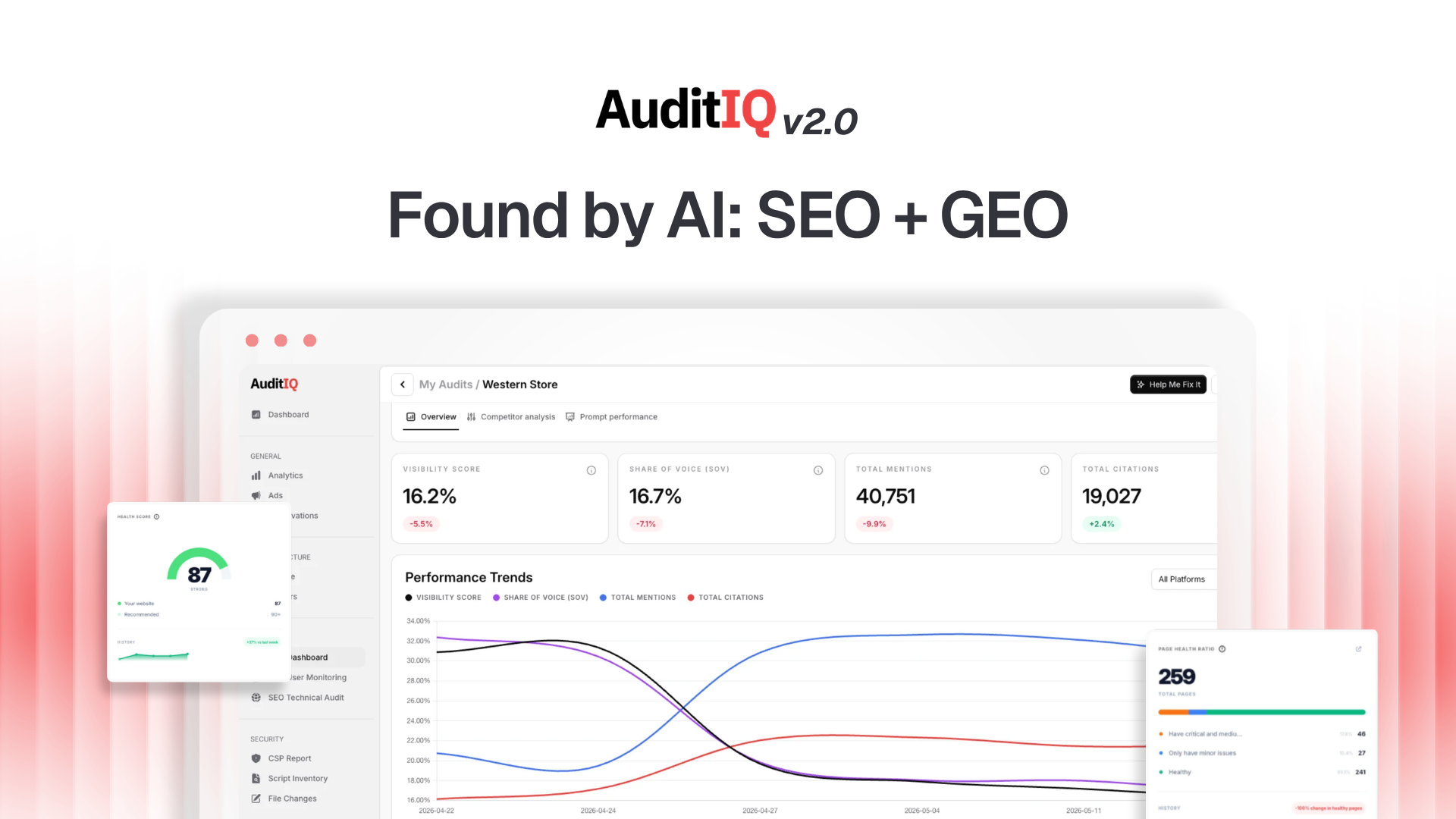
Being found by AI: why GEO is the new SEO for eCommerce
AI is changing how customers discover products. Ahrefs research found that when Google's AI Overview appears, the click-through rate for the organic position ranked first drops by up to 58%.
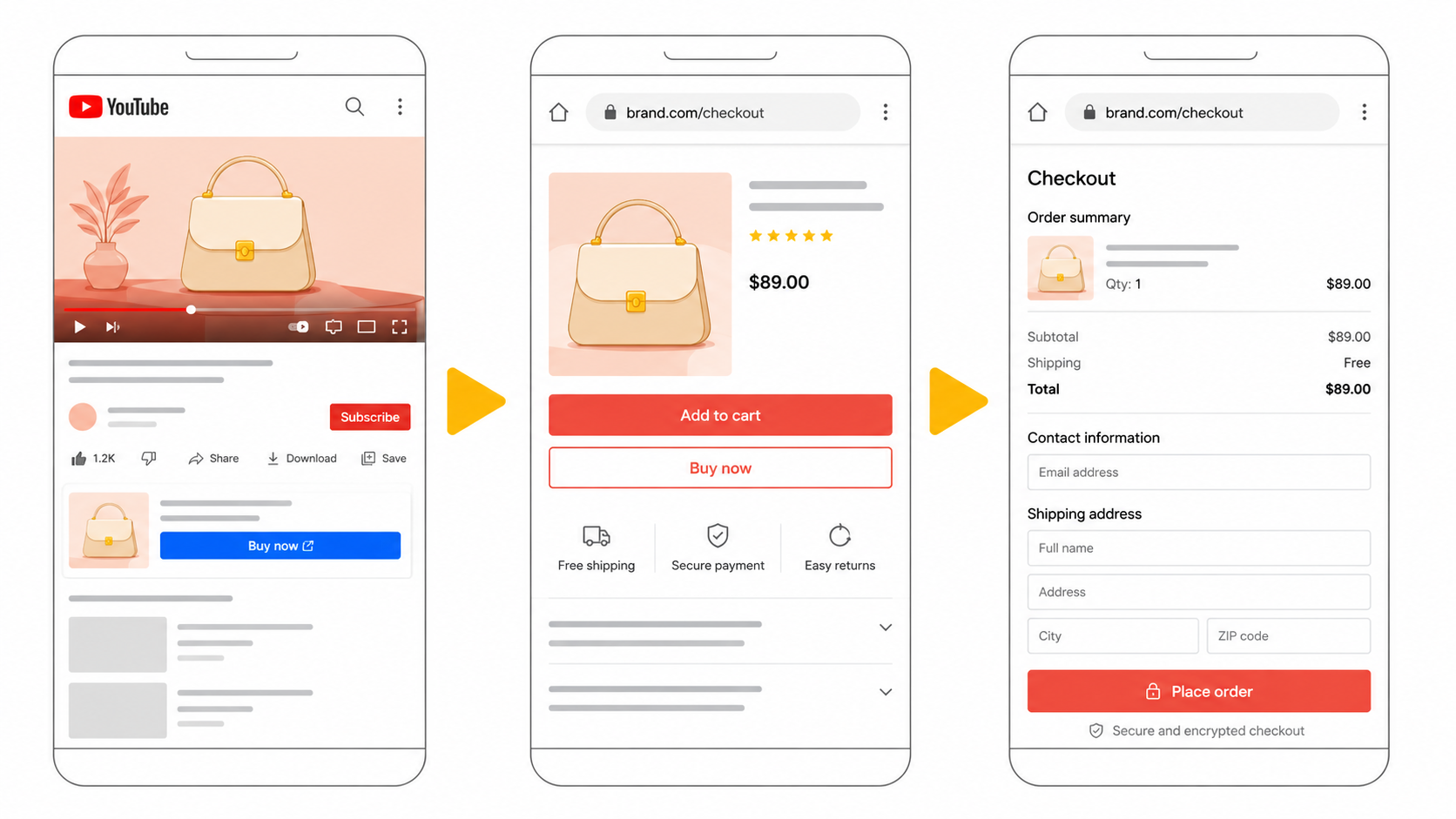
Google's Demand Gen checkout links are expanding: What your landing pages need to keep up
On July 29, Google announced its latest Demand Gen Drop, headlining the expansion of Checkout Links to nine new markets and reporting that advertisers using checkout URLs see a 6% conversion uplift on Demand Gen campaigns.

Your products exist but AI can't find them: How Generative Engine Optimisation is reshaping eCommerce discovery
AI engines don't scan for keywords in the traditional sense. They parse structured data, Product schema, Offer schema, Review schema, to extract machine-readable facts: price, availability, specifications, ratings, shipping information.

Adobe Commerce's 14-vulnerability security patch exposes the monitoring gap most merchants don't know they have
On July 14, 2026, Adobe released security bulletin APSB26-73, a patch addressing 14 distinct vulnerabilities across Adobe Commerce, Adobe Commerce B2B, Magento Open Source, and Adobe Commerce Events. Eight are rated critical, enabling arbitrary code execution, privilege escalation, and security feature bypass.
AuditIQ Weekly (July 29th 2026)
This week's AuditIQ Update unpacks a critical security patch, the rise of AI-powered product discovery, Google's consent enforcement, and the performance benchmarks every eCommerce merchant should know. Alex walks through the developments from the past seven days and connects them to the operational decisions merchants need to make right now. Key topics covered: - Adobe Commerce's APSB26-73 security bulletin: 14 vulnerabilities, 8 critical, and why patching is only half the story - The accelerating eCommerce security landscape: WooCommerce CVEs and the 42% year-over-year increase in WordPress vulnerabilities - Generative Engine Optimisation (GEO): new research reveals that 65–71% of AI-cited pages use structured data, and what that means for product discoverability - Google's EU consent mode enforcement: conversion tracking is being silently disabled for non-compliant stores - Shopify's July changes: EU import duties, USPS rate hikes, and API changes merchants need to verify - Core Web Vitals benchmarks: why roughly half of all websites are failing Google's performance thresholds - The common thread: why the customer-facing storefront has become the most important surface to monitor Whether you're patching a security vulnerability, optimising for AI search, or verifying your consent implementation, the message is the same: continuous storefront monitoring is now essential. Learn more at www.auditiq.cloud .

Google Merchant Center's September 2026 overhaul: Three changes that could silently break your shopping campaigns
Google Merchant Center is about to get significantly busier for eCommerce teams. Between now and the end of September 2026, three separate changes will take effect, and the overlap between them creates a compliance challenge that most merchants aren't prepared for.
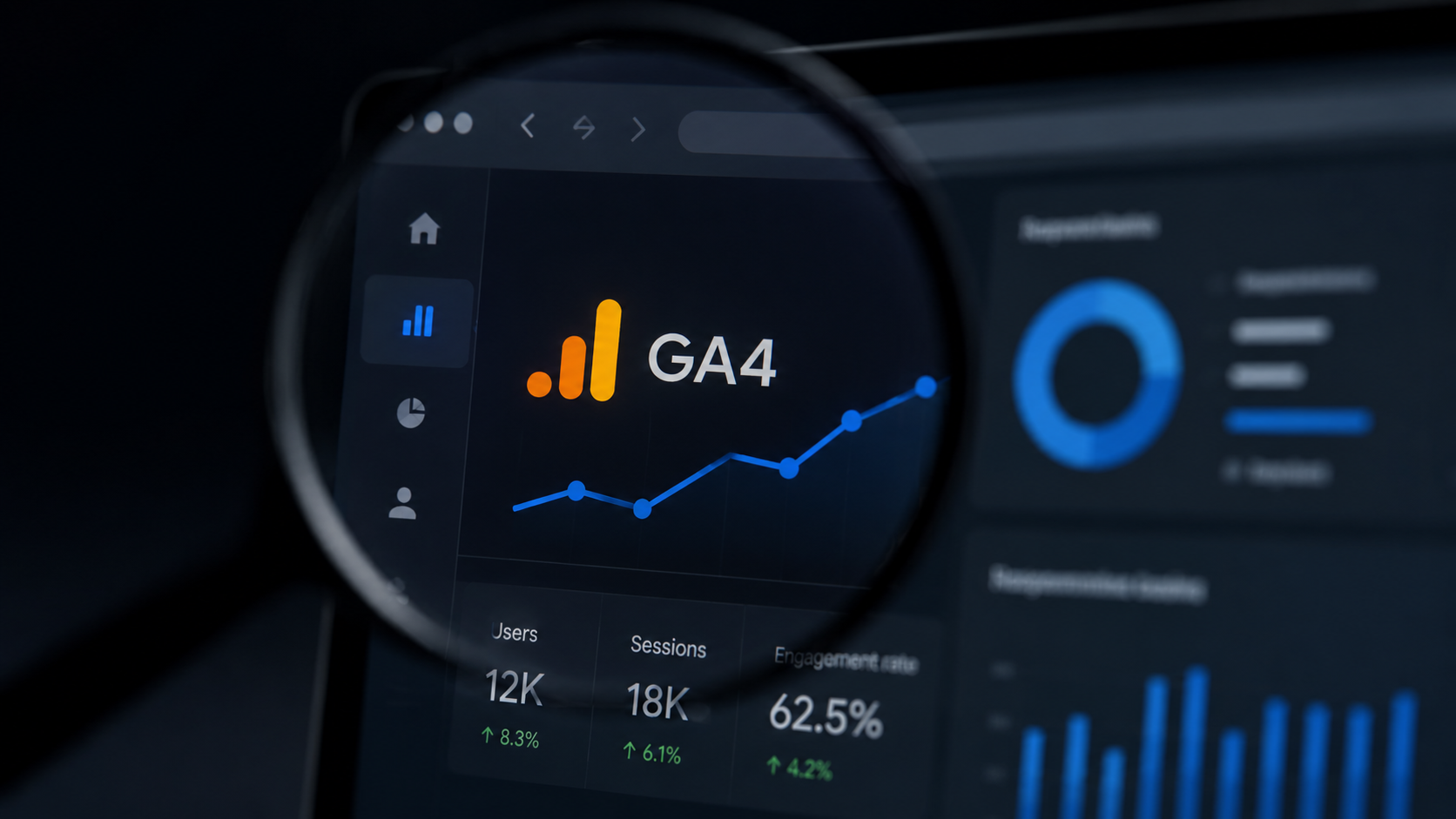
Google's GA4 consent mode change is live: Many eCommerce stores are already losing conversion data
Six weeks ago, on June 15, 2026, Google made a fundamental change to how GA4 and Google Ads share data. The Google Signals toggle in GA4, a setting many eCommerce teams relied on to control advertising data flow, quietly stopped governing Google Ads cookie and identifier collection. That responsibility shifted entirely to Consent Mode's `ad_storage` parameter.
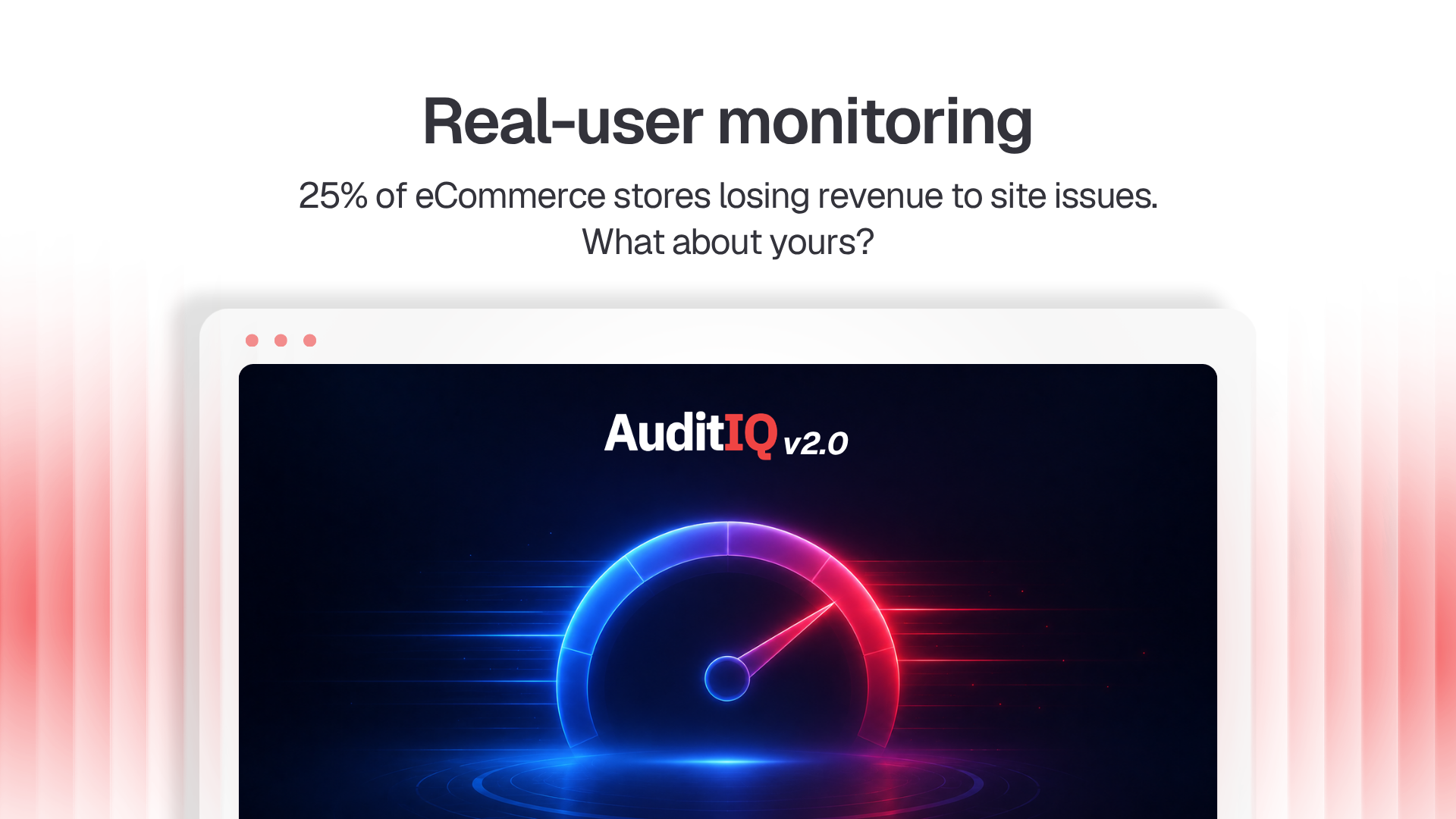
The hidden revenue leak behind slow pages and site errors
AuditIQ has always monitored websites. V2 changes how merchants understand problems. Instead of dozens of disconnected alerts, AuditIQ v2 correlates every signal into a single Observation: what is broken, who it is affecting, how much revenue is at risk, and what changed to cause it.

API errors disrupted 8.9% of eCommerce sessions: Why is nobody talking about them?
The 8.9% figure deserves closer attention than it’s getting. API errors disrupted nearly 1 in 11 sessions, and the 16% year-over-year increase tells a specific story about the direction eCommerce architecture is heading.
AuditIQ Weekly (July 22th 2026)
In this week's episode of AuditIQ Update, host Alex unpacks a pivotal week in eCommerce technology: from Shopify's triple developer platform release to an urgent Magento security patch and fresh data on why cart abandonment refuses to budge. Alex explores how the growing complexity of modern eCommerce stacks creates hidden failure points that traditional monitoring can't catch, and why the gap between what teams deploy and what customers experience is the most important metric in the industry. - Shopify ships metafield event triggers, full-stack ShopifyQL analytics, and the Liquid July '26 developer preview with new {% block %} and {% partial %} tags - Adobe releases critical Magento security patch APSB26-73 addressing 14 vulnerabilities, with end-of-life deadlines looming for versions 2.4.5 and 2.4.6 - Global cart abandonment holds at 70.22% despite billions in recovery spending, and why technical failures are the overlooked driver - Payment failures affecting 1 in 5 transactions and the $47 billion revenue leakage problem - Core Web Vitals and INP: the data linking 0.1-second speed improvements to 8% conversion gains - Interop 2026 and how CSS-native features are reducing JavaScript dependencies for better eCommerce performance - The eCommerce tooling landscape's convergence trend and what it means for monitoring Whether you run a Shopify Plus store or manage a Magento deployment, this episode delivers actionable intelligence on keeping your eCommerce site healthy. Visit www.auditiq.cloud to learn how AuditIQ monitors the customer experience that matters most.

Real User Monitoring Is Now a $5 Billion Market: Is Your Store Part of the Reason Why?
The end-user experience monitoring market hit an estimated $5 billion in 2026 and is projected to reach $9.1 billion by 2030. Those aren't vanity numbers. They represent a fundamental shift in how digital businesses think about performance, moving from "is the server up?" to "is the customer's experience actually working?"

PCI-DSS v4.0.1 is now enforced: Is your storefront actually compliant?
The mindset shift AuditIQ v2 encourages is simple: stop treating PCI-DSS v4.0.1 as a form to fill in once a year and start treating it as a continuous state you can see at any moment.

The 2026 Core Web Vitals reality check: Why INP is the metric eCommerce teams can't keep ignoring
It's mid-2026, and a quiet shift has reshaped how Google evaluates your eCommerce site. Interaction to Next Paint (INP), the metric that replaced First Input Delay (FID), has gone from a curiosity to the single most consequential performance signal for online stores.

From 39% to 55.3%: Four years of Core Web Vitals progress, and why the number never sits still
Google's newly published Chrome UX Report data for June 2026, released July 14, puts the figure at 55.3% of origins passing all three Core Web Vitals. That's a 16-point climb in four years.

WooCommerce 10.9's checkout overhaul highlights what happens when performance goes unmonitored
WooCommerce 10.9, released on June 23, 2026, introduced a deceptively simple change that speaks volumes about a problem most store owners don't even know they have: their checkout is slower than it needs to be, and it's silently costing them revenue.

Cloudflare just opened client-side security to everyone: Why eCommerce teams should care and what it doesn't cover
On March 30, 2026, Cloudflare announced a significant change: its advanced Client-Side Security tools, previously gated behind enterprise plans, are now available to all users. At the same time, Cloudflare made domain-based threat intelligence free for everyone on the base tier.
AuditIQ Weekly (July 15th 2026)
In this week's episode, host Alex unpacks a jam-packed week in eCommerce technology, from Cloudflare opening its AI-powered client-side security to all users, to Shopify's aggressive international commerce push, to a sobering reality check on Core Web Vitals performance across the web. Alex connects the dots between security threats, platform changes, and the revenue impact of site performance, exploring why eCommerce teams need both shields and speedometers in 2026. - Cloudflare democratises client-side security with LLM-assisted malicious script detection, what it means for merchants of all sizes - New WebRTC-based skimming techniques and the evolving threat landscape for online stores - Shopify's duties-inclusive pricing for Managed Markets and why it could reshape cross-border conversion rates - Key Shopify developer changelog updates: Partner identity verification, POS extensions, and API deprecations to watch - The 55.9% problem: why nearly half of all web origins still fail Core Web Vitals, and what the latest data says about the conversion cost - Magento Open Source 2.4.9's major architectural changes and why post-upgrade monitoring is critical - How modern CSS advancements (border-shape, scroll-driven animations) are shifting performance from JavaScript to the browser - The rise of agentic commerce and what it means for site monitoring Stay ahead of the trends shaping eCommerce monitoring. Learn more at www.auditiq.cloud .
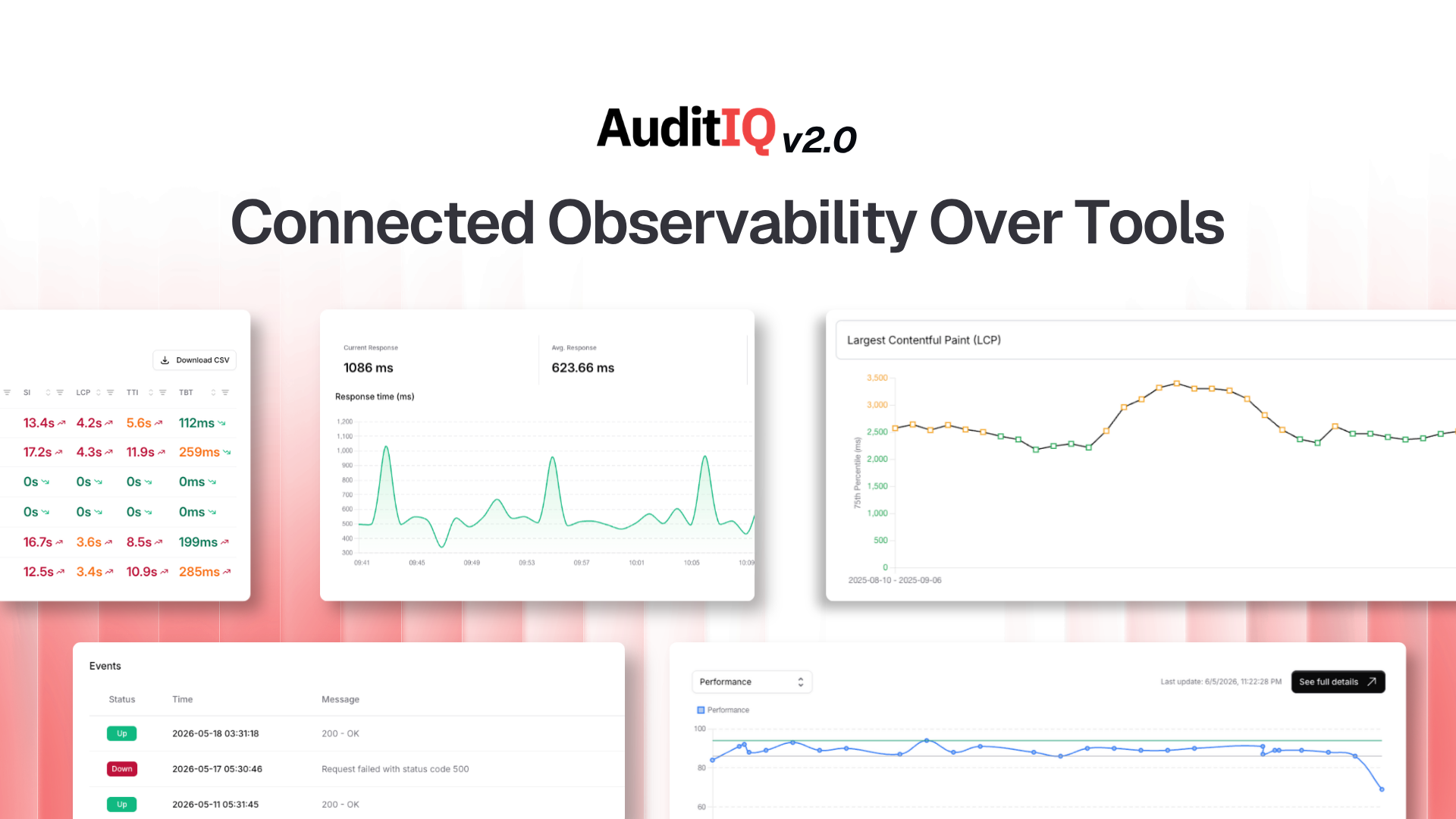
Isn’t AuditIQ just another monitoring tool? The case for connected observability
AuditIQ v2 replaces all six with one platform covering everything your store needs to be monitored. One login, one bill, one place to look, at a fraction of the combined cost of running six separate tools.

Shopify's July 2026 POS discount update: What changed, and what it actually costs you
This is an Action Required change from Shopify, published July 8, 2026, regarding how fixed-amount discounts work in Shopify POS. When a fixed dollar discount is applied to a product line, the discount amount entered is now applied per unit instead of as a total for the whole line.
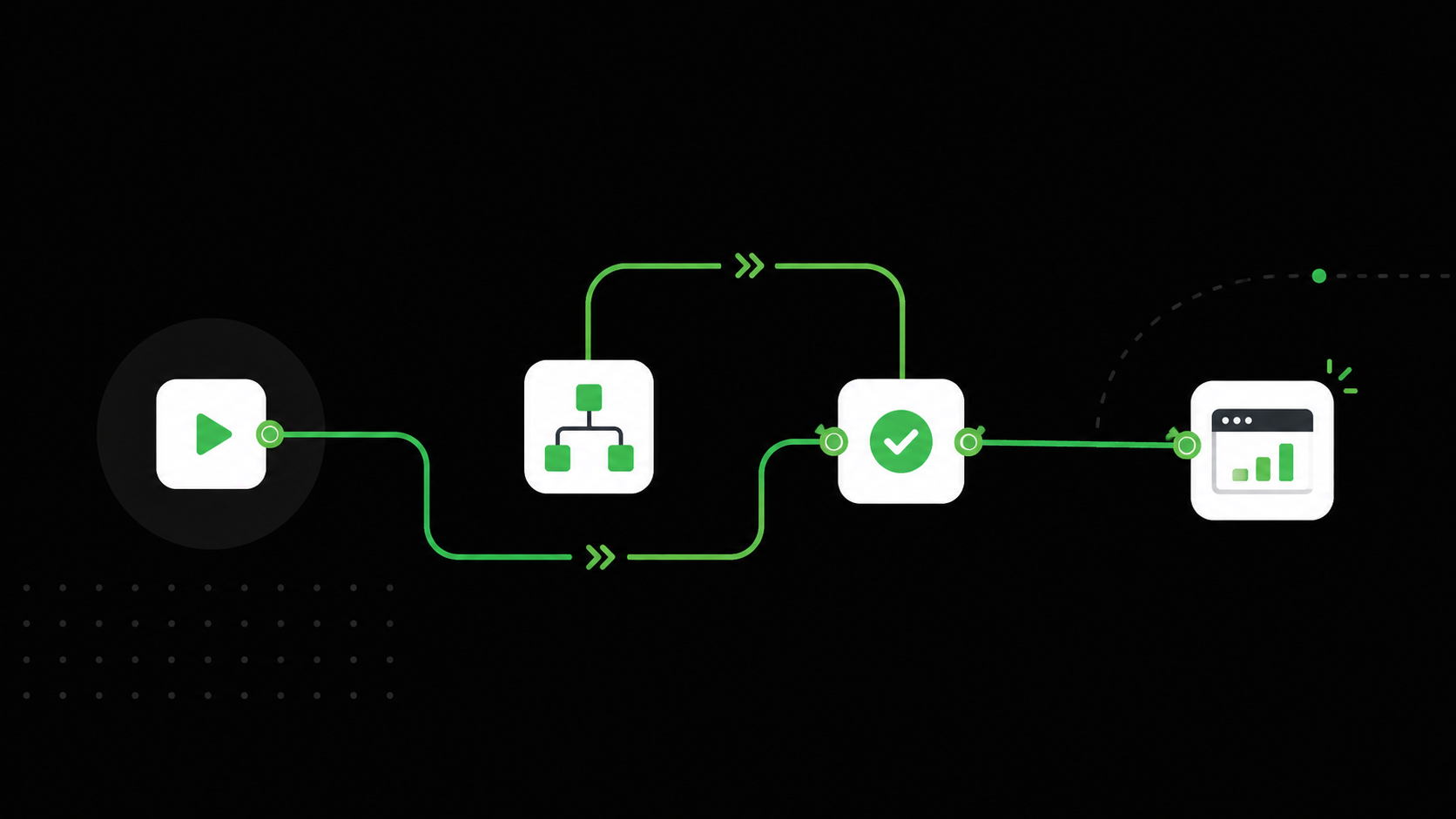
Shopify Flow's breaking change overhaul: Why graceful degradation matters for eCommerce uptime
On July 7, 2026, Shopify released two important updates to Shopify Flow that significantly improve how custom action extensions behave when developers make changes.
AuditIQ Weekly (July 8th 2026)
In this week's episode, Alex unpacks a packed seven days in eCommerce: from platform changes that redefine how automation failures are handled, to a sophisticated new payment skimmer that bypasses one of the web's most trusted security defences. The episode explores what these developments mean for merchants trying to protect revenue and maintain visibility across increasingly complex online stores. Key topics covered: - Shopify Flow's two major updates to how breaking changes and runtime URLs are handled, and why "graceful degradation" creates a new monitoring challenge - WooCommerce 10.9.3 and the three rapid-fire dot releases that followed the 10.9 launch, including a fatal error in the email system - Sansec's discovery of a WebRTC-based payment skimmer that completely bypasses Content Security Policy protections - The $47 billion annual revenue leakage from payment failures — and why that's only the visible portion of the problem - Core Web Vitals in 2026: how INP is changing the way eCommerce performance is measured - CSS Grid Lanes accessibility concerns for product grids and masonry layouts - The rise of agentic commerce tools and what they mean for site reliability - Why resilience without visibility is a trap for eCommerce teams Whether you run a Shopify, WooCommerce, or Magento store, this episode delivers actionable insight into the monitoring challenges shaping eCommerce in mid-2026. Learn more about eCommerce monitoring at www.auditiq.cloud .

The $14,000-per-minute downtime problem: Why eCommerce monitoring has become a revenue discipline
The result of that global effort was an average cost of $14,056 for every minute of unplanned IT downtime. For large enterprises, that figure stretches past $23,750 per minute.

JavaScript errors hit 17.8% of retail sessions: What should eCommerce merchants do?
The 2026 Digital Experience Benchmark analysed 99 billion sessions across more than 6,500 websites and surfaced a number that deserves more attention than it’s getting: JavaScript errors disrupted 17.8% of retail sessions in 2025.
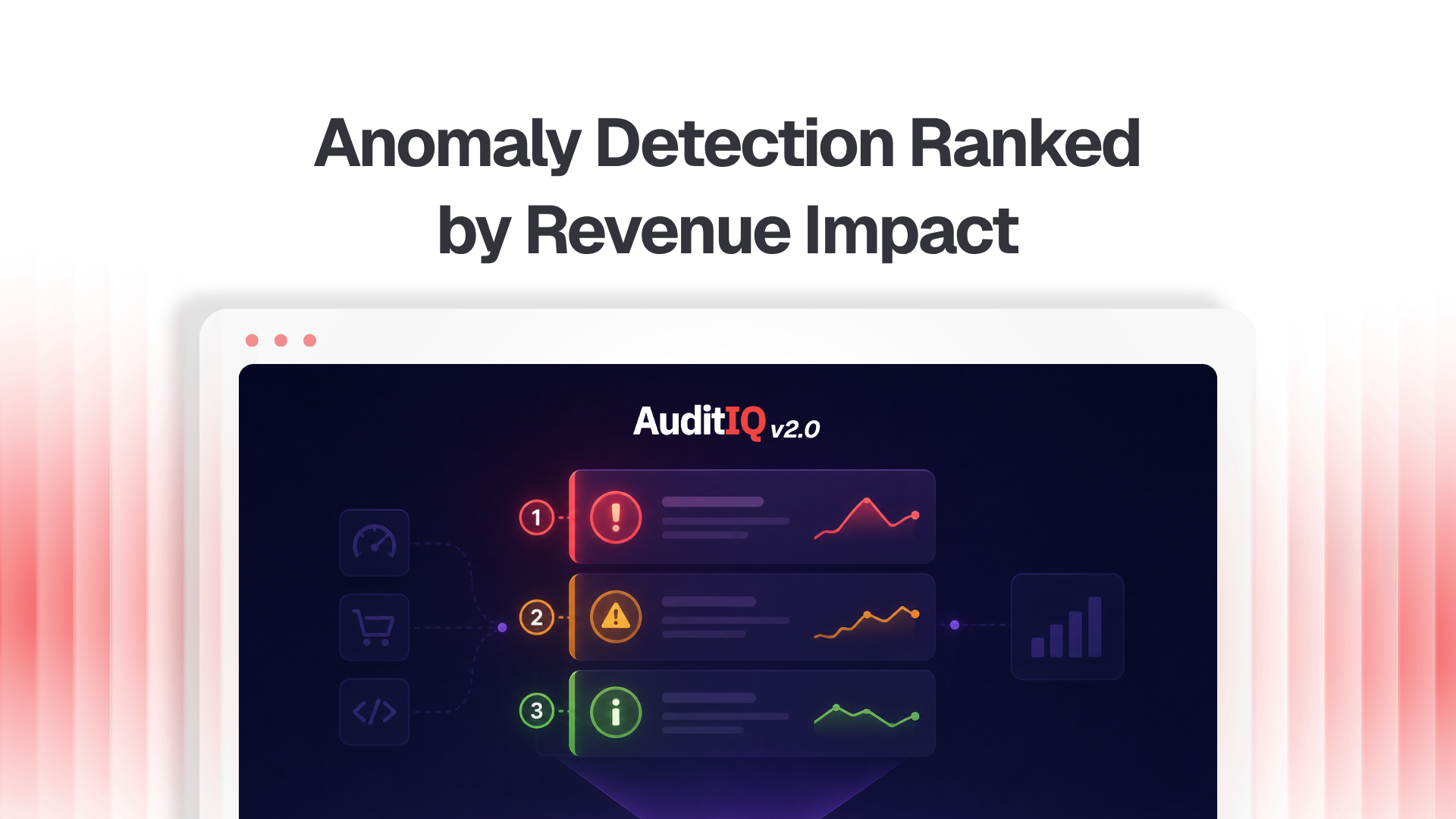
From alerts to answers: How AuditIQ’s anomaly detection finds what matters
AuditIQ v2’s intelligence layer watches across modules, learns what normal looks like for your store, and surfaces the unusual, then ranks it. Instead of fifty equal-weight alerts, you get a short, prioritised list of Observations.

Shopify’s market-driven shipping: What it is, what it changes, and what to monitor
On July 1, 2026, Shopify rolled out one of its most significant architectural changes for international merchants: market-driven shipping, now available in API version 2026-07 and in feature preview for development stores.

Shopify and Vercel are rebuilding Hydrogen together: What it means for merchants and their monitoring stack
On June 30, 2026, Shopify and Vercel announced a significant deepening of their partnership: Hydrogen, Shopify’s official React-based framework for headless storefronts, is being rebuilt in close collaboration with Vercel.
AuditIQ Weekly (July 1st 2026)
In this week's episode, Alex unpacks a busy seven days across the eCommerce technology landscape. Shopify's Hydrogen framework now deploys to Vercel with a single click, opening headless commerce to a wider audience, but raising important questions about who monitors the customer experience once the storefront is live. Meanwhile, Cloudflare ships Wrangler 4.106.0 with AI Search capabilities, and Smashing Magazine's research reveals that a 31% LCP improvement can drive an 8% conversion lift. Alex also revisits the WebRTC payment skimmer story and explains why traditional security tools are blind to this new class of attack. - Shopify Hydrogen one-click deployment to Vercel and the headless monitoring gap - New Shopify Order Attribution API in version 2026-07 - Cloudflare Wrangler 4.106.0: AI Search jobs, R2 jurisdiction support, and edge case fixes - Sansec's WebRTC skimmer: why CSP and HTTP monitoring aren't enough - Smashing Magazine's UX ROI research: the cost of production bugs and performance impact on conversion - Global cart abandonment reaches 70.22%, the technical causes behind the numbers - CSS Gap Decorations, field-sizing, and new frontend features that affect Core Web Vitals - The rise of agentic commerce and what it means for eCommerce monitoring Learn more about ecommerce monitoring at www.auditiq.cloud .

Shopify's UCP cart migration and the hidden risk of agentic checkout errors
Shopify announced the deprecation of its Storefront MCP cart tools in favour of the new Universal Commerce Protocol (UCP) Cart MCP. The deprecated get_cart and update_cart tools on the Storefront MCP endpoint will be maintained until August 31, 2026, but Shopify is directing all developers to migrate to the new UCP-conforming Cart MCP tools at https://{shop-domain}/api/ucp/mcp.

The $260 billion checkout gap: How much of it is yours to recover?
According to Baymard’s own decade of large-scale checkout testing, $260 billion of that lost revenue is directly recoverable, not through more ad spend, not through better products, but through a better checkout experience.
AuditIQ Weekly (June 24th 2026)
With Shopify's Scripts hard deadline just six days away, host Alex breaks down what ecommerce teams need to know, and what happens to stores that aren't ready. This week's episode also dives into eye-opening 2026 cart abandonment data showing $260 billion in recoverable revenue, explores why stores loading under two seconds convert 2.5x better, and examines the sophisticated WebRTC skimmer threat that bypasses Content Security Policy. From Cloudflare's Wrangler 4.104.0 updates to new CSS scroll-triggered animations that could boost your INP scores, Alex connects the dots between this week's biggest developments and their impact on your bottom line. Topics covered: - Shopify Scripts shutdown on June 30 and the PriceRule API deprecation in version 2026-10 - Cart abandonment hitting 70.22%, the technical causes behind $260B in lost revenue - Payment failures affecting 1 in 5 eCommerce orders ($47B annual leakage) - Core Web Vitals as revenue metrics: the 2.5x conversion advantage for fast-loading stores - Performance-optimised video embeds and CSS scroll-triggered animations for better INP - Cloudflare Wrangler 4.104.0 and workerd runtime updates for headless commerce - WebRTC-based payment skimmers bypassing traditional security controls - Magento 2.4.9 upgrade considerations six weeks post-release Learn more about eCommerce monitoring at www.auditiq.cloud .

The 2026 eCommerce margin squeeze: Why your site's hidden errors are now your biggest financial risk
Tariffs have raised landed costs. Consumer confidence is wavering. Paid media CPMs remain stubbornly high. And the growth-at-all-costs playbook that worked from 2020 to 2024, pour money into acquisition, let volume carry the numbers, is no longer viable for most online retailers.

Shopify Dawn 15.5.0's CLS: What eCommerce teams should learn from it
Shopify released Dawn v15.5.0. Alongside new product disclosure blocks and storefront event support, they changed body layout styles for improved cumulative layout shift (CLS).

Cloudflare's critical WebSocket Patch exposes a bigger question: Who's watching your eCommerce stack?
Cloudflare just shipped a flurry of updates last 16th June across its Workers SDK ecosystem, Wrangler 4.102.0, Miniflare 4.20260617.0, and the Cloudflare Vite Plugin 1.42.0. Buried in the patch notes of each release is the same critical fix: a bump of the ws WebSocket library from 8.20.1 to 8.21.0, addressing CVE-2026-48779, a high-severity remote denial-of-service vulnerability.

Shopify Editions Spring '26: Why real-time monitoring matters more than ever
Shopify Editions Spring '26 dropped on June 17 with over 150 updates, but two changes buried in the developer changelog deserve far more attention than they're getting. Together, they signal a fundamental shift in how the eCommerce industry thinks about storefront observability.

Shopify's Metafield breaking change is a wake-up call: Why silent API failures are eCommerce's costliest bug
On June 16, 2026, Shopify quietly rolled out a change that will break functionality for any app using undefined metafields through the Customer Account API. Starting immediately, app metafields without a formal definition will silently return no value, no error message, no deprecation warning.

The $47 Billion gap between fast and functional
A 500ms improvement in page load time for a $10 million store translates to roughly $500,000 in recovered revenue, according to 2026 benchmarks. But the half that accounts for a staggering $47 billion in annual revenue leakage is about things that break, go missing, or silently fail without anyone noticing.
AuditIQ Weekly (June 17th 2026)
In this week's episode, Alex breaks down the most significant developments in eCommerce monitoring and security from the past seven days — including a genuinely novel payment skimmer that's bypassing one of the web's most trusted security defences, a Shopify API change that's silently breaking app functionality, and eye-opening industry data that reveals why speed metrics alone aren't enough to protect your revenue. Key topics covered: - Sansec's discovery of a WebRTC-based payment skimmer that bypasses Content Security Policy on Magento stores - Shopify's Customer Account API metafield change and what it means for headless and custom checkout implementations - Cloudflare Wrangler 4.101.0: autoconfig graduation, local image transformations, and temporary account support - The $47 billion annual revenue leakage from payment failures, and what merchants are missing - Harry Roberts' Obs.js library and the rise of adaptive web performance - Core Web Vitals in 2026: conversion impact data and why functional correctness matters more than speed alone - Shopify Scripts deprecation deadline: 13 days and counting - Why eCommerce monitoring needs to evolve beyond traditional RUM and APM Whether you're a store owner, developer, or technical lead managing a live eCommerce site, this episode covers the threats, changes, and trends you need to know about this week. Learn more about eCommerce monitoring at www.auditiq.cloud .

AuditIQ v2 is here: Monitoring Grew Up
Monitoring used to tell you what broke. AuditIQ v2 tells you what changed, why it matters, and what to do next, connecting every signal across your store in one place.

The 15% problem: Why website errors are eCommerce's most underestimated revenue leak in 2026
15% of shoppers abandon their carts because the website had errors or crashed. In an industry generating trillions in annual revenue, that 15% represents an enormous, largely preventable revenue leak.

Shopify's Polaris web components push: The hidden performance risks of extension migration
Shopify dropped a significant announcement this week: the new AI Toolkit for upgrading extensions to Polaris web components is now live, and it comes with a hard deadline. By October 1, 2026, any app with checkout or customer account UI extensions running on API versions 2025-07 or earlier will be blocked from updating.
AuditIQ Weekly (June 10th 2026)
This week's episode covers a critical new threat to eCommerce payment security, a Chrome release with tangible performance benefits for online stores, and fresh data that puts hard revenue numbers on web performance metrics. Alex breaks down what these developments mean for merchants and technical teams managing live eCommerce sites. - A novel WebRTC-based payment skimmer that bypasses Content Security Policy and has affected over half of targeted stores, and why client-side monitoring is now essential - Magento Open Source 2.4.9's 500+ enhancements and what merchants need to watch during upgrades - Chrome 149's CSS Gap Decorations and WebSocket bfcache improvements, and their real-world impact on ecommerce performance - The latest Core Web Vitals research: how 100 milliseconds can translate to an 8.4% conversion improvement - Baymard Institute's 2026 cart abandonment data, still hovering above 70%, and the technical causes behind it - Payment failure data showing $47 billion in annual global revenue leakage - Cloudflare Wrangler 4.99.0's new integration testing capabilities for edge-first ecommerce - What agentic commerce means for site reliability and monitoring requirements Stay ahead of the issues that impact your online store's revenue and customer experience. Learn more at www.auditiq.cloud .
Only 39% of eCommerce sites pass Core Web Vitals: It's costing more than rankings
Here's a number that should concern every eCommerce team: according to HTTPArchive data, only 39% of eCommerce websites pass all three Core Web Vitals thresholds simultaneously. That's three percentage points below the global average of 42%, meaning online stores are actually worse at page performance than the web at large.

The 3–5% revenue leak: Why eCommerce teams can't afford to ignore hidden site errors in 2026
There's a number that should keep every eCommerce leader up at night: 3–5%. That's the percentage of annual gross merchandise value that hidden website errors silently drain from the average online retailer, and approximately 90% of these issues are never reported by customers.

The WebRTC Skimmer Threat: Why real-time eCommerce monitoring is no longer optional
Security researchers at Sansec uncovered a novel payment skimmer that leverages WebRTC data channels, the same technology that powers video calls and real-time browser communication, to steal payment data from online stores. What makes this attack particularly alarming is that it bypasses Content Security Policy (CSP), one of the most widely deployed browser-side defences against data exfiltration.
AuditIQ Weekly (June 3rd 2026)
This week's episode unpacks a major shift in the ecommerce threat landscape, explores why performance metrics are now direct revenue indicators, and connects the dots between security, speed, and the customer experience. Alex examines a new breed of payment skimmer that evades traditional browser defences, the landmark Magento 2.4.9 release and its security implications, and the latest data linking Core Web Vitals to measurable conversion gains. From browser updates to cart abandonment statistics, this episode covers what ecommerce teams need to know heading into mid-2026. - A novel WebRTC-based payment skimmer bypassing Content Security Policy on Magento stores - Magento/Adobe Commerce 2.4.9: PHP 8.5, monthly security patches, and the PolyShell fix - Shopify's 2026 web performance toolkit and the push toward Real User Monitoring - Why a 100ms improvement can boost ecommerce conversion by up to 8.4% - Chrome 148's native lazy loading for video and audio, and what it means for INP - The $47 billion global cost of payment failures in ecommerce - Google's "preferred sources" feature and its implications for trusted online stores - How European vs. American shopping behaviours shape technical requirements - Accessibility maturity frameworks and their parallel to performance monitoring For more on ecommerce monitoring, visit www.auditiq.cloud .

The Hidden Tax on eCommerce: Why technical errors are the conversion killer nobody budgets for
Recent industry data paints a stark picture: 88% of eCommerce brands report losing over $100,000 per month to site bugs, and 90% of those bugs go unreported by customers. The gap between what breaks and what gets fixed is where revenue goes to die.
WooCommerce 10.8 just dropped: Is your store ready for what it can't tell you?
WooCommerce 10.8.0 landed on May 26, 2026, bringing a solid set of improvements that any store owner or developer should welcome: an upgraded Orders REST API with schema refinements, matured transactional email capabilities (including a new post-purchase review invitation email), and a batch of under-the-hood performance enhancements.
AuditIQ Weekly (May 27th 2026)
In this week's AuditIQ Update, host Alex unpacks a packed seven days in eCommerce, from a major WooCommerce release that changes the game for millions of stores, to eye-opening UX research that puts a dollar figure on performance friction, and engineering breakthroughs from Shopify and Cloudflare that reveal where platform infrastructure is heading. The episode explores the dangerous gap between what merchants think their customers experience and what actually happens in production. - WooCommerce 10.8.0: what the faster storefront and WordPress 6.9 requirements mean for your update strategy - Why Smashing Magazine's "Ten Data-Backed Truths of User Experience ROI" should be required reading for ecommerce teams - The hidden monitoring challenge when expanding into new markets like India with localised payment integrations - Shopify's Redis-to-MySQL inventory migration and what it reveals about platform reliability at scale - Core Web Vitals in 2026: why lab scores and real-user data tell very different stories - The convergence of performance monitoring and revenue attribution, and why it matters now - How AI-driven troubleshooting creates a blind spot that only real-time monitoring can fill Stay ahead of eCommerce performance issues and protect your revenue. Learn more at www.auditiq.cloud .

The 35% checkout UX gap: How real-time monitoring completes the picture
Baymard's research finds that the average large-sized eCommerce site can gain as much as a 35.26% increase in conversion rate through better checkout UX design alone. These aren't soft metrics. They're revenue numbers.

The Invisible Checkout: How view transitions, performance debt, and silent errors are redefining what "working" means in eCommerce
There's a quiet revolution happening in how web pages move. This week, CSS-Tricks published an in-depth exploration of cross-document view transitions, the browser-native API that lets multi-page applications animate seamlessly between screens without JavaScript frameworks. The article's focus was on scaling these transitions across hundreds of product cards, the kind of interface pattern that every eCommerce product listing page relies on.

40,000 WooCommerce checkouts compromised: Why real-time store monitoring is no longer optional
On May 14, 2026, eCommerce security firm Sansec disclosed that a critical vulnerability in Funnel Builder by FunnelKit (CVE-2026-47100) was being actively exploited to inject payment skimmers into WooCommerce checkout pages.

AI changes how customers find you: Site experience becomes the only moat
Practical Ecommerce published a thought-provoking piece this week: "AI Shifts Product Discovery, not Loyalty." The thesis is straightforward: agentic commerce and AI-powered shopping assistants are fundamentally changing where shoppers begin their purchase journey, but they're not changing why customers choose one merchant over another.
What WooCommerce’s Nightly Builds teach every eCommerce team
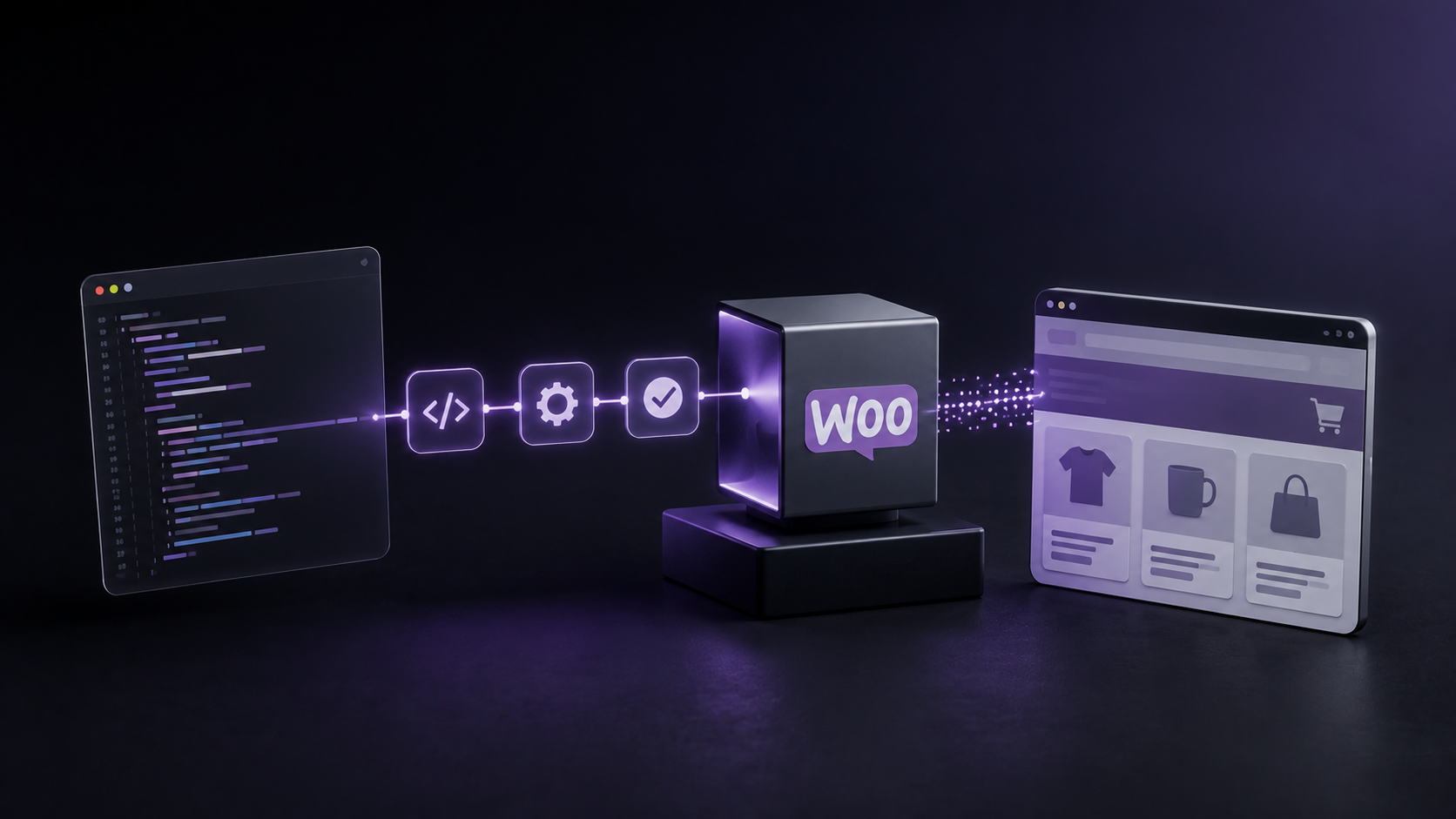
WooCommerce made a quiet but significant announcement last week: WooCommerce.com is now running on nightly WooCommerce Core builds. Not stable releases. Not even beta branches. Nightly builds is the freshest, least-proven code coming out of the development pipeline.
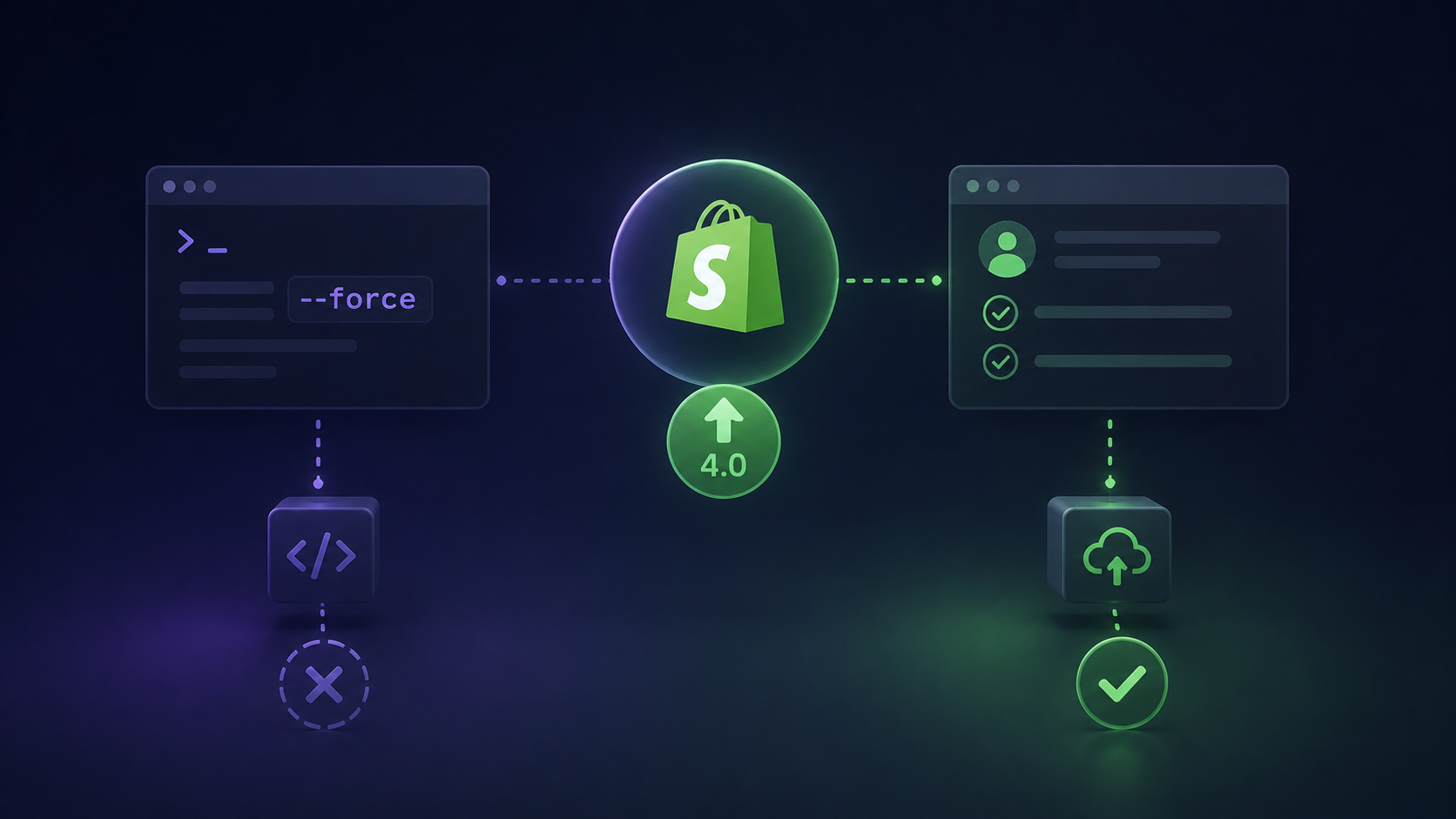
Shopify CLI 4.0 removes the safety net: Is your deployment pipeline ready?
Shopify CLI 4.0 removes the --force deployment shortcut and replaces it with more granular controls, requiring ecommerce teams to review and potentially update their CI/CD pipelines to avoid deployment issues.

The cart you don't own: What Google's merchant-free shopping vision means for eCommerce teams
At Google I/O 2026, the company laid out a vision of building toward checkout experiences embedded directly in search results, powered by AI-driven product discovery that may never send a click to your storefront.

Website is getting heavier: eCommerce sites are paying the price
The HTTP Archive's 2025 Web Almanac, published earlier this year and analysed across 17.2 million live websites, delivered a stat that should alarm every eCommerce team: the median mobile page has grown 202.8% in a decade, from 845 KB in 2015 to 2,362 KB in 2025. That's the raw weight of what we're shipping to real users on real devices.
AuditIQ Weekly (May 20th 2026)
This week's episode is a big one. Alex breaks down the most significant platform release in the Magento ecosystem in years - Magento 2.4.9 - and explains why its sweeping infrastructure changes (new PHP requirements, Valkey replacing Redis, OpenSearch 3, and 500+ bug fixes) create both opportunity and risk for merchants planning their upgrade. He also covers WooCommerce's delayed 10.8 release and the long-awaited arrival of variation galleries in core, and explores what Shopify's expanding Agentic Storefronts mean for site reliability when AI agents have zero tolerance for errors. - Magento 2.4.9 GA release: PHP 8.4/8.5 requirement, Valkey 8, OpenSearch 3, and critical security bulletin APSB26-49 - Mage-OS 2.3.0 maintenance and security release - WooCommerce 10.8 delay and variation galleries coming to core - Smashing Magazine's "Ten Data-Backed Truths of UX ROI", why 24% lower bounce rates for CWV-passing sites should change your roadmap - Cross-document view transitions: what they mean for ecommerce multi-page sites - Shopify Agentic Storefronts and why AI shoppers raise the reliability bar - The convergence of platform complexity, UX-revenue data, and agentic commerce Learn more about eCommerce monitoring at www.auditiq.cloud.

The UX-revenue equation: What Smashing Magazine's data-backed research means for eCommerce teams
Smashing Magazine published a timely piece this week, "Ten Data-Backed Truths of User Experience ROI" by Carrie Webster, making the case that every extra second of friction has a measurable business cost. The article links user experience quality directly to revenue, retention, and long-term growth with hard numbers rather than design intuition.
Magento 2.4.9 lands today: Your monitoring strategy needs to land with it
Magento 2.4.9 reaches General Availability today, May 12, 2026. It's not a routine patch. Adobe is swapping out core framework components, mandating PHP 8.4 or 8.5, replacing Redis with Valkey 8 as the default cache backend, upgrading to OpenSearch 3.x, and shipping over 500 bug fixes accumulated across three pre-release cycles.

Shopify's new bot rate limits are a wake-up call: Is your storefront silently breaking for real customers?
On May 7, 2026, Shopify rolled out a significant platform change: stricter rate limits for bots and agents accessing the Storefront API and Shopify-hosted store pages. Bots that don't authenticate via Web Bot Auth now face the harshest throttling.

When DNS goes down: The .de TLD Outage and why eCommerce monitoring must go beyond your own servers
On May 5, 2026, DENIC, the registry responsible for all .de domains, published broken DNSSEC signatures, and in an instant, millions of German websites became unreachable. Not because of a server crash. Not because of a code deployment. Because of a cryptographic signature error at the DNS registry level.

The 90% Problem: Why most eCommerce bugs never get reported, and what that costs you
Approximately 90% of critical website errors are never reported by customers. When shoppers encounter a broken checkout, a payment gateway that won't process, or product images that refuse to load on their device, they don't call support. They don't fill out feedback forms. They simply close the tab and buy from someone else.
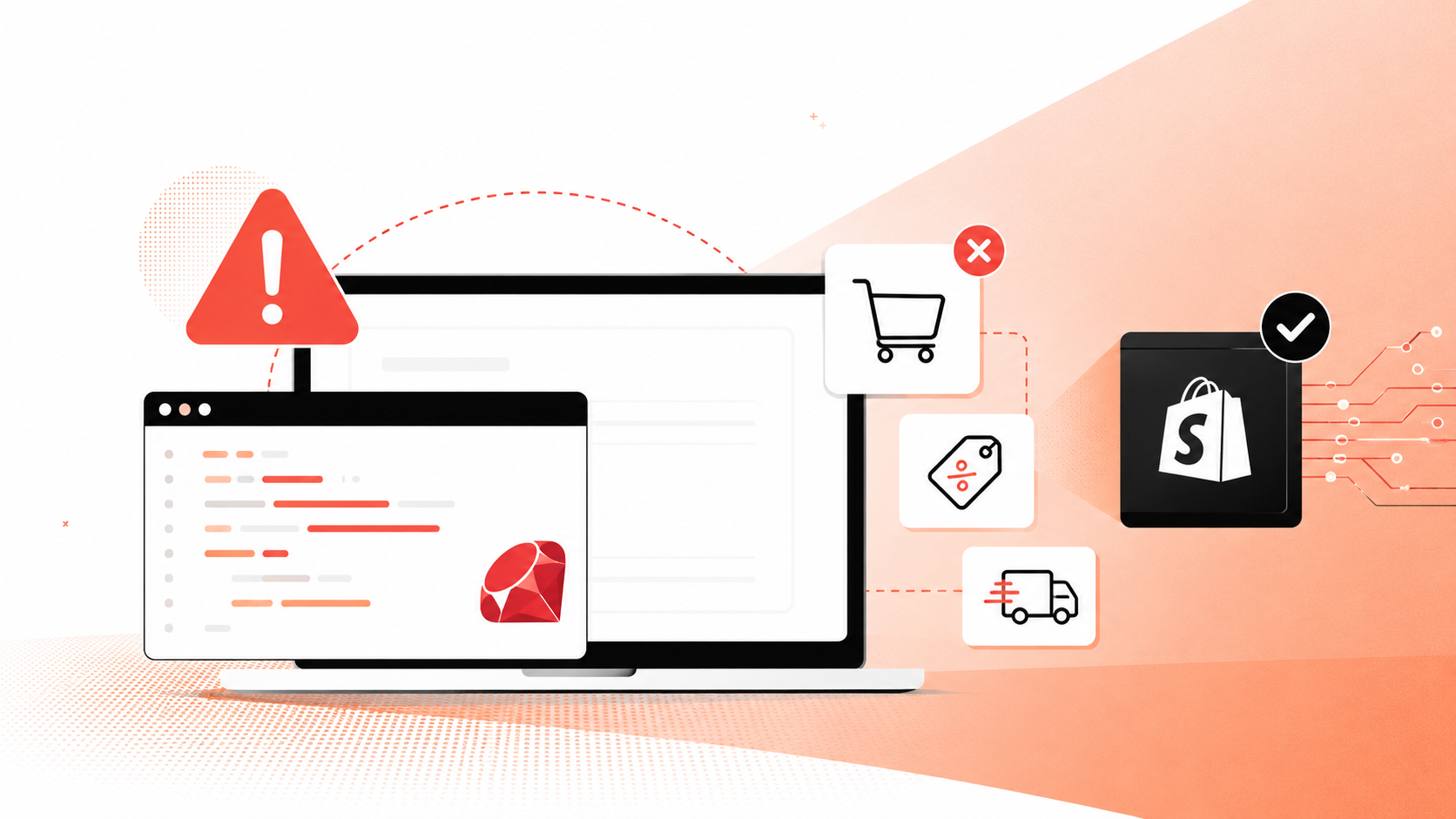
Shopify Scripts Sunset: Why June 30 is a monitoring wake-up call for every store
On June 30, 2026, Shopify will permanently retire Scripts, the Ruby-based customisation engine that thousands of Shopify Plus merchants have relied on for years to power custom discount logic, shipping rules, and payment gateways at checkout.
AuditIQ Weekly (May 6th 2026)
In this episode, Alex unpacks a landmark ten days in eCommerce, from Shopify's record-breaking Q1 results to the fast-approaching Scripts sunset deadline and fresh data on how milliseconds translate directly into revenue. With platform changes accelerating and checkout complexity growing, the case for real-time eCommerce monitoring has never been stronger. - Shopify Q1 2026: merchants cross $100 billion in quarterly GMV, with 34% revenue growth and a bold AI-era positioning - The June 30 Shopify Scripts sunset: what the new multi-discount cart line support means for migration, and what it doesn't - Shopify analytics annotations, inventory webhook enhancements, and refund page improvements - WooCommerce 10.8.0-beta.1: what merchants and developers should be testing now - The $500,000 millisecond: new data quantifying the revenue impact of page speed improvements - Core Web Vitals in 2026: why they matter for conversion even more than for SEO - Interop 2026 and advanced CSS features: richer experiences, new monitoring challenges - Cart abandonment in 2026: the technical errors hiding in the top reasons shoppers leave - The real-user monitoring market's explosive growth trajectory Stay ahead of eCommerce disruptions, learn more at www.auditiq.cloud .

Shopify now tracks Core Web Vitals in the Dev dashboard: Why that's only half the battle
On May 4, 2026, Shopify rolled out a significant update to its developer tooling: Core Web Vitals monitoring is now built directly into the Dev Dashboard. App developers can view daily and 28-day P75 rollups for LCP (Largest Contentful Paint), INP (Interaction to Next Paint), and CLS (Cumulative Layout Shift), the same metrics used to evaluate Built for Shopify compliance, all in one place.
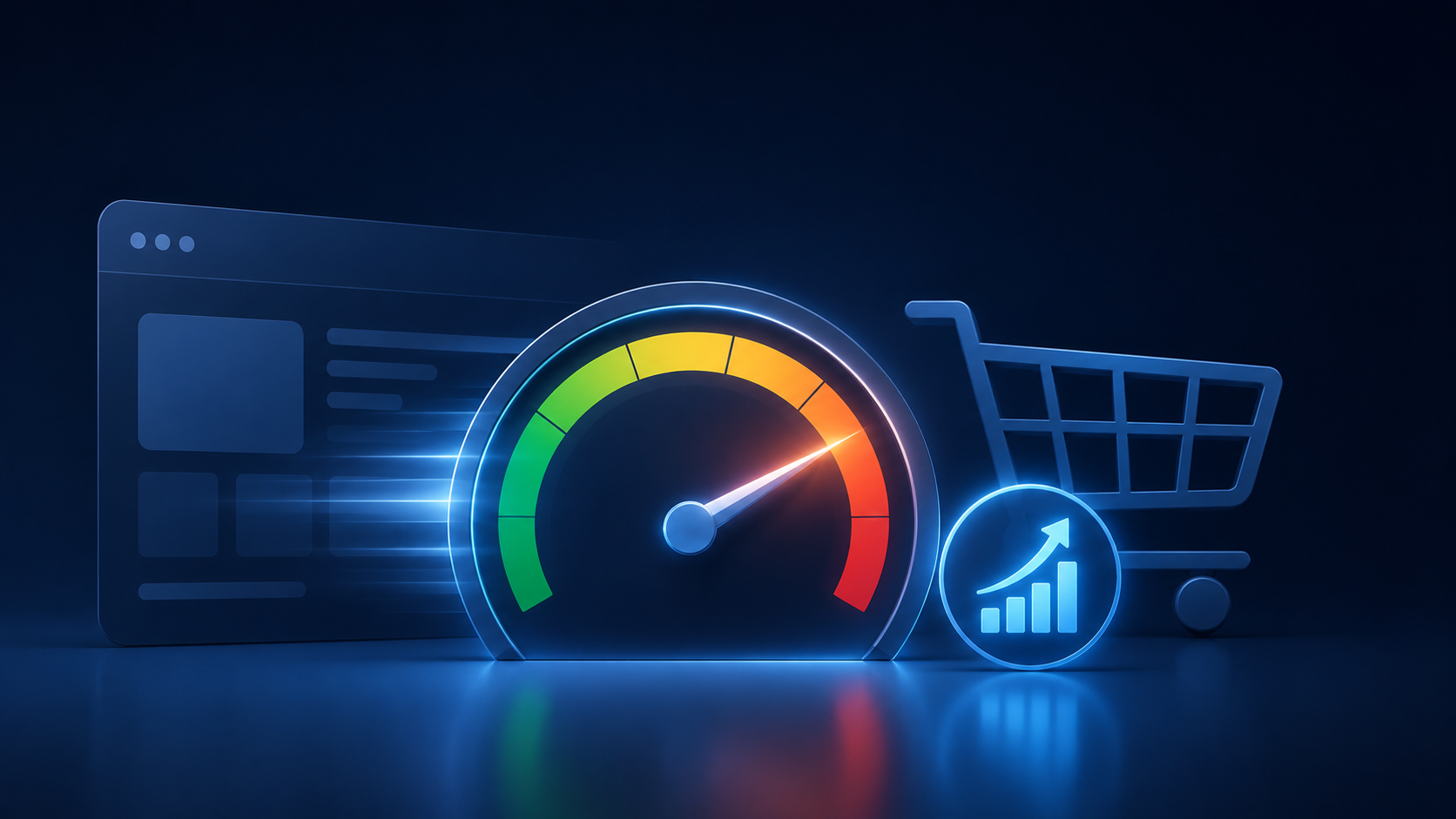
The 100-millisecond rule: Why Core Web Vitals are still the biggest conversion lever in eCommerce
There's a stat making the rounds in 2026 that deserves more attention than it's getting: every 100-millisecond improvement in page load time can increase eCommerce conversion rates by up to 7%. For a store generating $10 million annually, a 500ms improvement translates to roughly $500,000 in recovered revenue.

Cumulative Layout Shift: The silent conversion killer most eCommerce teams aren’t measuring
CLS improvements consistently reduce bounce rates and increase conversion. The mechanism is straightforward: visual instability erodes trust. A page that shifts around feels broken even when it technically works.

Session timeouts, accessibility, and the hidden checkout tax you didn't know you were charging
In the United States alone, the CDC reports that 1 in 4 adults lives with a disability. These are your customers, and if your session management is punishing them for needing an extra minute, you're imposing what amounts to a hidden checkout tax on a significant portion of your audience.

Shopify's cart bug fix reveals a bigger truth: Silent checkout errors are costing you sales
Last week, Shopify shipped @shopify/[email protected] and @shopify/[email protected] (Shopify Hydrogen v2026.4.0) and buried inside the patch notes was a fix that should make every eCommerce developer pause and think.

Shopify's CSS Subsetting is a performance win: Are you catching the errors it can't fix?
On April 23, Shopify announced a significant storefront performance optimisation: automatic CSS content subsetting for {% stylesheet %} tags. The platform will now intelligently split and serve only the CSS a page actually needs, reducing payload sizes and improving load times across all Shopify storefronts.

Shopify just opened Checkout Blocks to every plan: Why error monitoring matters more than ever
Shopify's April 2026 changelog is packed with changes that democratise powerful features previously reserved for Plus merchants. Checkout Blocks, including order value limits, are now available on Basic, Grow, and Advanced plans.

Half of shoppers will only try twice: What a new survey reveals about eCommerce's micro-error problem
When eCommerce teams think about site reliability, they think about outages, the "site is down" kind of crisis that triggers war rooms and executive Slack threads. But a newly published survey suggests the bigger threat isn't outages at all. It's the small stuff: the failures that never take a site down but quietly convince a shopper to leave.

The $18 billion checkout problem: Why session timeouts, site errors, and invisible friction are eCommerce’s biggest revenue leak
Average eCommerce cart abandonment rate sits stubbornly at 70.22%. On mobile, it’s north of 75%. Online retailers lose an estimated $18 billion annually from abandoned carts, and the projected value of merchandise left in online carts reaches roughly $4 trillion each year.

Shopify's AI-powered app review catches bugs before launch: Who's catching bugs after?
On April 20, 2026, Shopify rolled out a significant upgrade to its Partner Dashboard: an AI-powered self-review tool that checks apps against App Store requirements before submission.
AuditIQ Weekly (April 18th 2026)
This week's episode unpacks a critical sequence of events across the ecommerce landscape. Alex examines how Shopify's rapid-fire Hydrogen 2026.4.1 patch exposed the risks of silent cart failures, why WooCommerce's native AI agent integration marks a tipping point for the industry, and what Cloudflare's new Agent Readiness score signals about the future of online commerce. Drawing on fresh research from Microsoft Clarity on checkout abandonment and the latest Baymard Institute data, the episode explores a widening gap between how ecommerce stores are monitored and how they're actually being used. - Shopify Hydrogen 2026.4.1: the VisitorConsent bug that silently broke cart operations — and what it means for monitoring - WooCommerce MCP: native Model Context Protocol support arrives, putting AI agents inside your store - Cloudflare Agents Week wrap-up: Agent Readiness scores, shared compression dictionaries, Flagship feature flags, and the full agent infrastructure stack - New Shopify API changes: isActive on InventoryLevel, mTLS certificate renewal for Payments Apps - Microsoft Clarity's research on the three core drivers of checkout abandonment - CSS-Tricks' view transitions recipes and their ecommerce implications - The monitoring gap: why heatmaps and session replays miss the failures that matter most - Building a dual monitoring strategy for human and AI agent channels New episodes drop weekly. Visit www.auditiq.cloud to learn how AuditIQ helps ecommerce teams detect silent failures and protect revenue in real time.
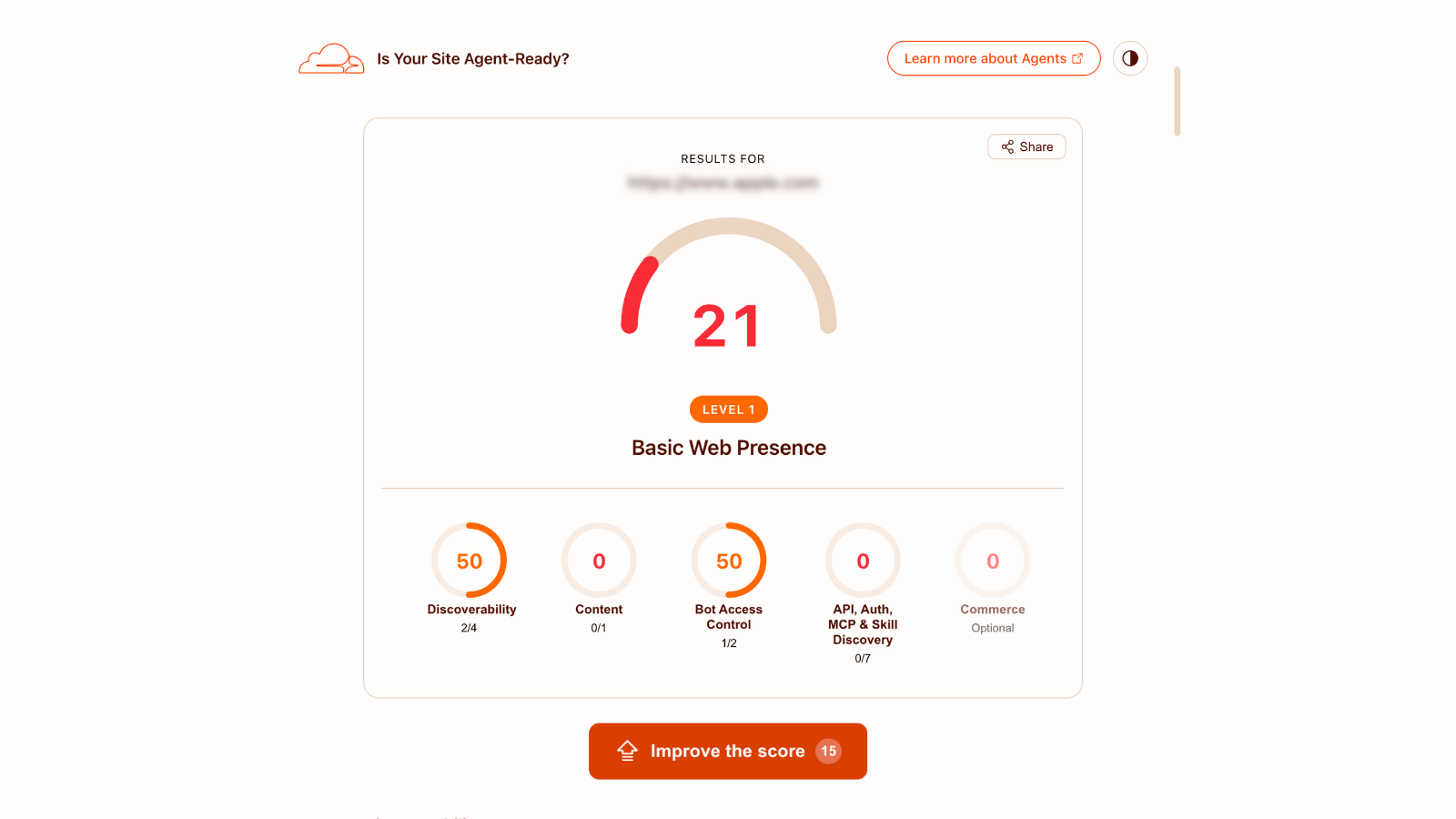
Is your store agent-ready? What Cloudflare's new score means for eCommerce monitoring
On April 17, 2026, Cloudflare introduced the Agent Readiness score, a new metric that evaluates how well websites support AI agents. Available via their isitagentready.com tool, it examines whether your site provides the structured data, API endpoints, and machine-readable content that AI agents need to interact with your business programmatically.

AI Agents can now shop on your site: Can you see them?
Watching this shift closely because it's exactly the kind of problem that demands a new approach to monitoring. When your customers arrive via channels you can't see, through interfaces you didn't build, the only way to ensure quality is to monitor what actually happens, every error, every slow response, every broken flow, and connect it to business outcomes.
Shopify Hydrogen 2026.4.0: Why mandatory API proxies and new cart error codes mean you need better monitoring
Last week, Shopify shipped one of the most consequential Hydrogen releases in months. Hydrogen 2026.4.0 goes well beyond a routine patch; it introduces breaking changes that will affect every headless Shopify store running on recent API versions.

Cloudflare hits 500 Tbps: Faster infrastructure won't fix the bugs bleeding your revenue
Cloudflare made waves this week by announcing its global network has officially crossed 500 terabits per second of external capacity, enough to route more than 20% of the web and absorb the largest DDoS attacks ever recorded.
AuditIQ Weekly (April 10th 2026)
This week's episode is a must-listen for any ecommerce team navigating one of the most deadline-heavy fortnights in recent memory. Host Alex breaks down the convergence of Shopify's Scripts edit lockout (arriving April 15), major API 2026-04 breaking changes, and Adobe Commerce 2.4.4's extended support ending on April 14 — and explains why every one of these migrations carries real checkout risk. The episode also dives into fresh industry data, including a global cart abandonment rate that has climbed above 70%, the growing revenue impact of Google's Interaction to Next Paint metric, and downtime costs that now exceed $14,000 per minute for midsize businesses. Alex rounds out the briefing with a look at how the observability industry is pivoting from infrastructure dashboards toward revenue-aware monitoring — and what that shift means for online merchants. - Shopify Scripts deprecation timeline and what Plus merchants should do before April 15 - Shopify API 2026-04 breaking changes: checkout metafield deprecation, expiring tokens, RBAC, and metafield size limits - Adobe Commerce 2.4.4 extended support ending April 14 - Global cart abandonment hits 70.22% — the role of technical friction - Core Web Vitals in 2026: INP as the most heavily weighted responsiveness metric - The observability industry's pivot to business-outcome monitoring - BNPL adoption surging to 48% weekly usage — and the UX pitfalls that follow - A practical checklist for the week ahead For ecommerce monitoring that catches what synthetic tests miss, visit www.auditiq.cloud .

Google's March 2026 Core Update: New reality for eCommerce SEO
On April 8, 2026, Google confirmed that its March 2026 Core Update completed its 12-day rollout. Early analysis shows ranking drops of 20-35% for affected sites, with eCommerce stores hit particularly hard. The update reinforces what Google has been signalling for years: site speed, mobile performance, and clean technical execution are no longer nice-to-haves. They are ranking factors that directly determine whether customers find your store.

The 70% problem: Why eCommerce cart abandonment is still a technical crisis in 2026
Baymard Institute's 2026 meta-analysis, the most comprehensive study of its kind, aggregating data from 50 separate studies, puts the average cart abandonment rate at 70.22%. That means for every 10 shoppers who add something to their cart, only 3 complete the purchase.